A summer that is rewriting the records
The heat is finally easing across western Europe, which makes this a good moment to take stock of what the last two months meant, including for appliances nobody talks about during a heatwave: the ones that make cold at home.
The numbers are striking. Provisional Met Office statistics put the UK mean temperature for 1 June to 10 August 2026 at 16.48 °C, a full 1.88 °C above the 1991-2020 average. The existing record, set only last year, is 16.12 °C. For the season to fall short, the rest of August would have had to run more than 0.21 °C below average, and it did not. England and Wales have been running more than 2 °C above average all summer, and much of England spent it in drought after a record-dry July.
Across the Channel the picture is even more extreme, and better documented. Météo-France has confirmed that with a mean of 24.9 °C, July 2026 was the hottest month ever recorded in France since measurements began in 1900, ahead of August 2003 (24.8 °C), with an anomaly of +3.8 °C on mean temperatures and +5.2 °C on maxima.
But the figure that matters most to a refrigerator is not the afternoon peak: it is the night. During the French heatwave the minimum temperature on the night of 8 to 9 July never dropped below 30.6 °C at Vivès in the Pyrénées-Orientales, the highest minimum ever observed in mainland France and Corsica. In plain terms: in some kitchens the thermometer did not come back down for days on end. A cooling appliance shrugs off a three-hour spike. What wears it out is heat that never lets go.
The symptom: a wave of fridge breakdowns
Retailers see it before anyone else. In France, the group Fnac Darty told trade magazine LSA on 1 July 2026 that repair requests for refrigerators had jumped 58 % in a single week during the late-June heatwave. The same source puts a call-out on a cooling appliance at around 90 minutes on average, against roughly 30 minutes for a washing machine.
That combination is what turns a hot spell into a genuine problem. When demand spikes, engineers’ diaries fill up and the wait stretches into days, at the worst possible time of year to leave a week’s food sitting at the wrong temperature.
We see the mirror image of this on our side: every hot spell brings a run of customer questions about appliances that are “not getting cold enough”. In the vast majority of cases the appliance is not faulty. It is simply being used outside the range it was designed and tested for. And that range has a name, printed on the appliance, that almost nobody reads before buying.
Climate class: the code nobody reads
On the rating plate of your fridge, stuck to the inside of the cabinet or to the back panel, sits a two or three character code: SN, N, ST, T, or a combination such as SN-T. That is the climate class, and it means something very concrete: the range of ambient temperature within which the manufacturer commits that the appliance will hold its internal set point, without excessive consumption or damage.
This is not marketing. Climate class is one of the items that Delegated Regulation (EU) 2019/2016 requires to be published on the product information sheet and in the European EPREL database, alongside the energy class. Here is the full grid.
| Code | Name | Ambient temperature range | Designed for |
|---|---|---|---|
| SN | Extended temperate | 10 to 32 °C | Unheated rooms, utility room, pantry |
| N | Temperate | 16 to 32 °C | An ordinary kitchen in a heated home |
| ST | Subtropical | 16 to 38 °C | Warm rooms, south-facing kitchens |
| T | Tropical | 16 to 43 °C | Hot climates, Mediterranean regions |
| SN-ST | Combined | 10 to 38 °C | Cold room and warm room in one appliance |
| SN-T | Extended combined | 10 to 43 °C | The widest range on the domestic market |
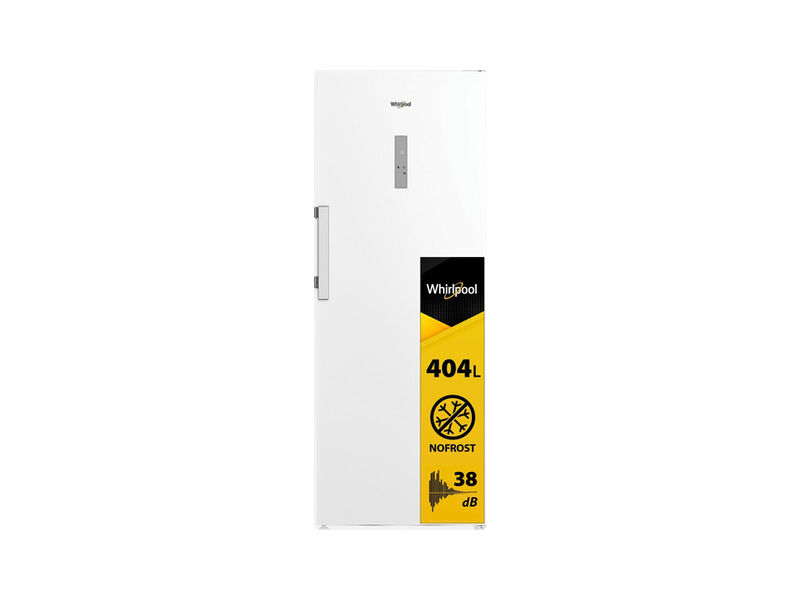
Combined classes, now very common, stack the lower and upper bounds. An SN-T appliance therefore covers 10 to 43 °C. Our Whirlpool WHFF6403W4E upright freezer is one of them, which is far from a detail once you put it in a garage or a utility room rather than the kitchen.
What actually happens when the room falls outside the range
A fridge used beyond its climate class does not stop dead. It degrades, gradually, in a sequence that is always the same.
- Duty cycle climbs. In normal conditions a compressor runs roughly 30 to 50 % of the time, in cycles. In a room at 38 °C with an appliance rated N, it barely stops at all. That is the first and easiest signal to spot: a fridge you can hear all the time.
- Consumption follows, and it can be quantified. Germany’s Federal Environment Agency puts it plainly: one degree less ambient temperature cuts a fridge’s electricity use by about 6 %. The reverse holds just as well. An appliance running continuously instead of cycling therefore drifts a long way from the consumption printed on its label, which is measured under standardised conditions, not in a kitchen at 35 °C.
- The freezer compartment goes first. In a fridge freezer the cooling capacity is shared. When the machine saturates, the more demanding job, holding -18 °C, is the one that slips. Soft ice cubes or unusual frost build-up are warning signs worth taking seriously.
- The condenser suffers. That is the black grille at the back, or the exchanger built into the side panels on newer models. It sheds heat through the temperature difference with the room. Shrink that difference and discharge pressure rises, so the compressor runs hotter, which accelerates its ageing.
- Condensation appears. Warm humid air against a cold surface makes water. Hence the droplets on the top shelf, the damp seals, and after a few weeks the dark marks on the door gasket.
One point deserves saying plainly, because it circulates every time it gets hot: turning the thermostat right down does not help. You are asking more of a machine that is already saturated, without giving it any extra means of dumping heat. The result is higher consumption, a compressor that never stops, and an internal temperature that usually does not budge. The useful settings remain 4 °C in the fridge compartment and -18 °C in the freezer, heatwave or not.
The locations that turn a heatwave into a breakdown
Climate class is decided at the scale of the room, not the town. An appliance rated N sails through a summer in Cornwall in a shaded, ventilated kitchen, and struggles in a conservatory in Scotland. The problem configurations are always the same.
- The uninsulated garage or outbuilding. The classic home for a second freezer, and the trickiest: it comfortably passes 40 °C on an August afternoon and drops below 10 °C in January. Only a wide class, SN-T or SN-ST, handles both extremes.
- The conservatory or summer kitchen. Under a glazed roof you go past the 43 °C of the tropical class without difficulty. No domestic appliance is designed for that, whatever it cost.
- Next to a heat source. A fridge pushed up against an oven, a hob, a dishwasher or a radiator lives in its own microclimate, several degrees above the rest of the room.
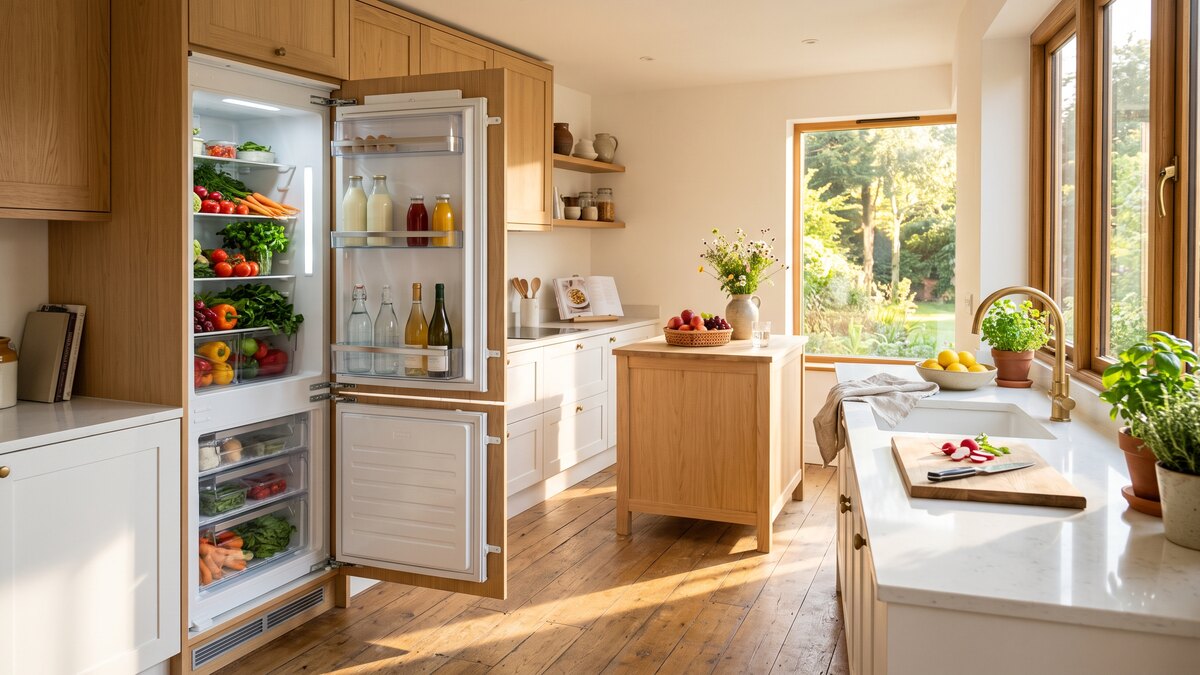
- Built in too tightly. An appliance needs air behind and above it to shed heat. A closed housing, a unit pushed flat against the wall, boxes stacked on top: the heat stops leaving, and the appliance effectively finds itself in a much hotter room than the real one.
- Direct sunlight. A cabinet catching the afternoon sun through a patio door easily picks up several degrees, especially a dark one.
The opposite problem is just as real. A freezer rated N, designed for 16 to 32 °C, sitting in a garage that drops to 5 °C in winter, can leave its thermostat satisfied that the set point is met and stop calling for the compressor, while the freezing compartment quietly warms up. That is exactly why the SN classes exist, and why some manufacturers explicitly label certain models as garage-ready.
What to check now that the heat is easing
The end of the hot spell is the right moment to take stock, quite literally in the cool. Five checks are enough, and none of them needs a tool.
- Note down the climate class. Rating plate inside the cabinet, or on the back. Write it somewhere: it is the piece of information that will decide your next purchase, and it becomes unfindable once the appliance has gone to the recycling centre.
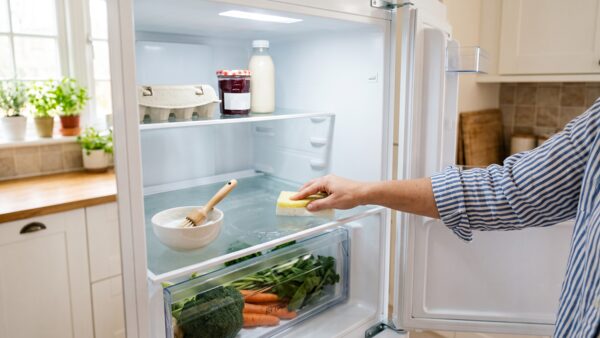
- Clean the condenser. Rear grille or plinth grille, vacuum cleaner with a soft brush, appliance unplugged. A single layer of dust is enough to degrade heat exchange, and this is the single most rewarding maintenance job there is. Our fridge cleaning guide sets out the full method.
- Check the door seals. Trap a sheet of paper in the closed door: it should resist when you pull. If it slides out on its own, the gasket is leaking and you are air-conditioning your kitchen through your fridge.
- Measure the real internal temperature. The dial on a fridge is a setting, not a measurement. An independent thermometer left in the middle of the cabinet, in a glass of water, for 24 hours gives you the truth: aim for 4 °C.
- Defrost the freezer. A few millimetres of frost is enough to noticeably degrade heat exchange, and on an appliance that has run flat out for two months the layer is often much thicker. See our defrosting guide.
Those five points apply to an appliance that held up. If yours showed signs of strain this summer, soft ice cubes, constant noise, temperatures creeping up by late afternoon, then checking the climate class comes first: it will tell you whether you have a tired appliance or a badly placed one. Those call for completely different answers.
Time to replace it? What we look at first
If your appliance spent the summer struggling and is getting on for ten years old, the question is a fair one. Here is the order in which we look at things.
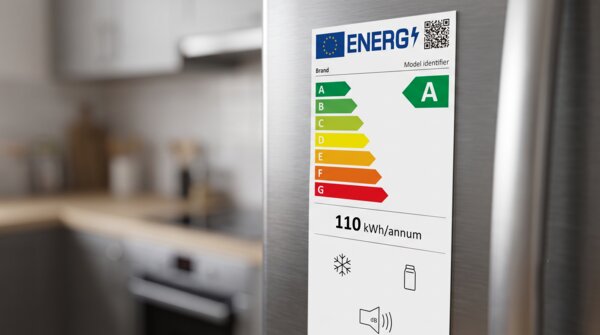
Climate class first, ahead of energy class. A highly rated appliance in class N, installed in a garage, will use more electricity than a lower rated one in class SN-T in that same garage, simply because it will never work under the conditions of its own test. Energy class is measured under standardised conditions; climate class tells you whether your conditions are among them. We set out how to read the whole label in our feature on the energy label on cooling appliances.
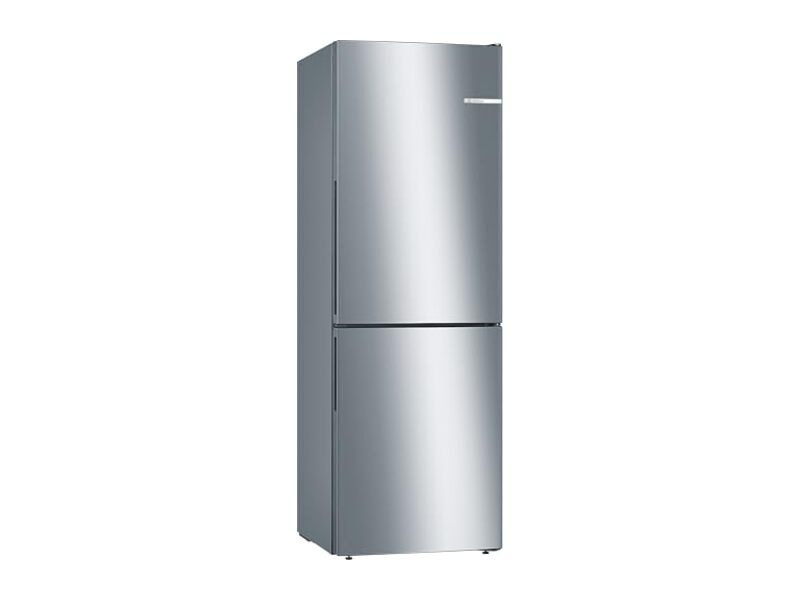
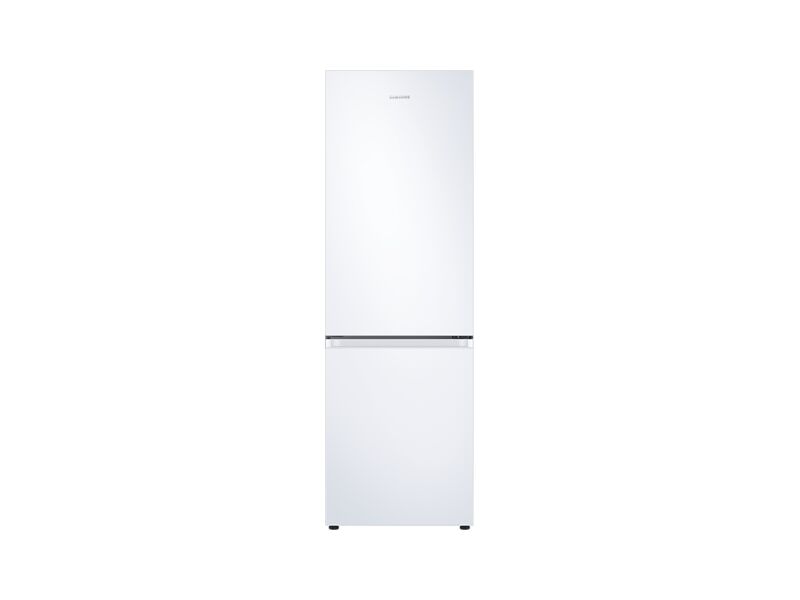
Then frost management. Heat and humidity make frost, frost degrades heat exchange, which makes the appliance run longer, which makes more frost. A No Frost system breaks that loop by circulating air and defrosting the evaporator automatically. On a family fridge freezer it is the feature that changes life most in August: the Samsung RB34C602ESA with its 344 litres of full No Frost, or the Bosch KGV33VLEAS Series 4 with LowFrost on a tighter budget, are two representative entry points into our fridges range.
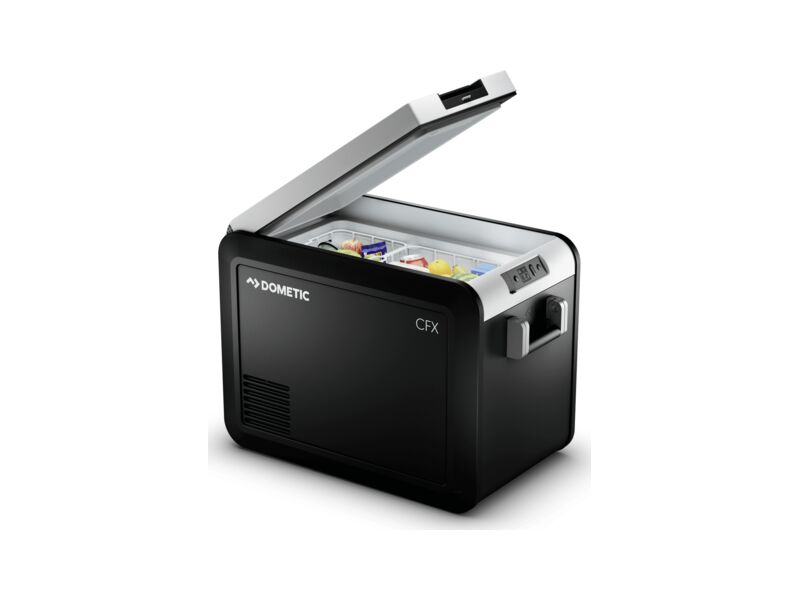
Finally, plan a fallback. This is the most practical lesson of the summer: when a fridge fails in late July, the engineer does not come the next day. A compressor cooler plugged into the mains makes a perfectly credible stand-in refrigerator while you wait for the repair, then goes back to being a cool box for the rest of the year. A model such as the Dometic CoolFreeze CFX3 45 goes down to -22 °C and, unlike a thermoelectric cooler whose performance is defined as a difference from ambient temperature, targets an absolute set point: it does not get dragged along by the heat of the room. We compare the two technologies in detail in our compressor versus thermoelectric comparison.
One last thought, because the summer of 2026 will not stay an isolated exception and a cooling appliance is bought for ten to fifteen years. The question is no longer “how warm is my kitchen today”, but “how warm will it be in August ten years from now”. On that score, a wide climate class costs a few pounds more and is never regretted.