Why defrost a freezer regularly?
A thin layer of frost on a freezer's walls can look harmless, almost cosmetic. Yet it's one of the most common causes of excess electricity use on an appliance that runs 24/7, 365 days a year. Frost acts as an insulator between the cold walls and the air inside: the thicker the layer, the longer the compressor has to run to hold the set temperature.
Beyond consumption, frost also eats into usable storage volume and makes it harder to find food buried at the back. ADEME recommends defrosting as soon as the layer passes 2 to 3 mm, which works out to roughly once every three months under normal use.
How long does it take to defrost a freezer?
Expect 2 to 4 hours for a full natural defrost (door open, appliance unplugged, no extra help), and 30 to 45 minutes with the speed-up methods below. The time mostly depends on how thick the frost has become and how warm the room is: the warmer it is around the appliance, the faster it melts.
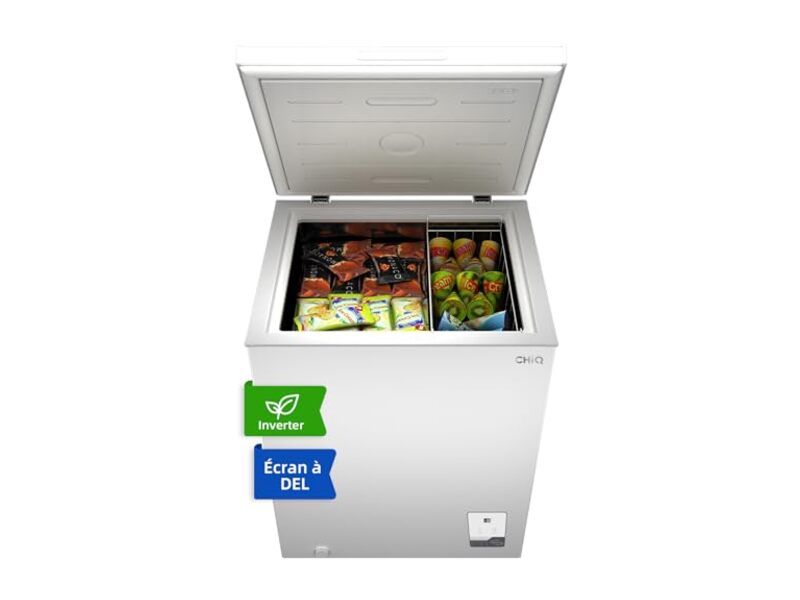
A chest freezer, bulkier and usually better insulated, generally takes longer to defrost than an upright freezer or the freezer compartment of a fridge-freezer.
The classic method, step by step
- 1. Empty the freezer and move its contents into a cool box or an insulated bag for the duration. A good insulated bag keeps frozen food at a safe temperature for several hours.
- 2. Unplug the appliance at the socket, never just via the thermostat: the compressor must not restart during the process.
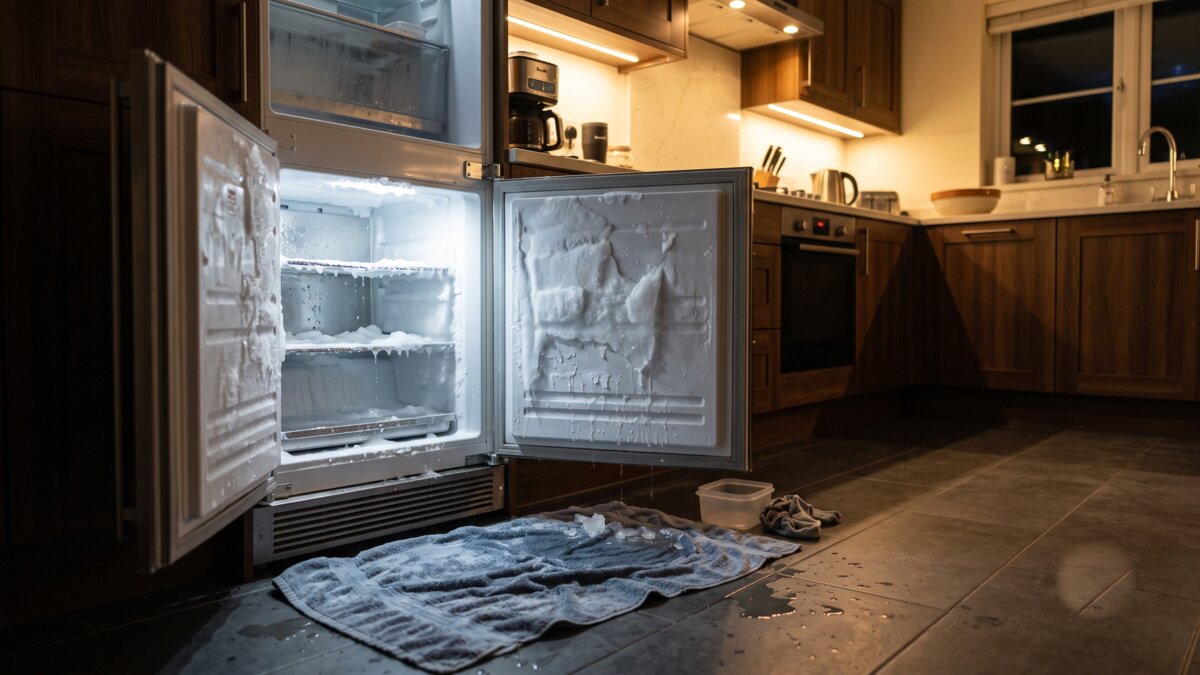
- 3. Leave the door wide open and place towels or a shallow basin on the floor to catch the melting water.
- 4. Let it work for as long as it takes, without forcing the process with a hard object (see below).
- 5. Wipe and dry the inside thoroughly before plugging back in: any leftover moisture will turn back into frost within hours.
Speeding up defrosting: the methods that actually work
Three safe methods can cut the waiting time by half or more:
- Bowls or pans of hot water placed inside, door closed, giving the steam time to soften the frost. It's the most commonly recommended method, and the safest: the heat spreads gradually with no risk to the walls.
- A fan pointed inside, door open, speeds up the exchange between the warm room air and the frost.
- A little diluted white vinegar sprayed on the thickest, already-softened frost sheets helps them peel off more easily, with no lingering smell after a plain water rinse.
Can you defrost without emptying or unplugging everything?
A partial defrost, without emptying or unplugging the whole appliance, is possible to remove a thin, recent frost layer (under 5 mm) on an accessible wall: a gentle scrape with a soft plastic spatula is usually enough, never a metal or sharp tool. For a thick or old buildup, though, a full defrost is the better call: repeated partial defrosts wear the appliance down more than they help, without ever solving the underlying issue.
If you absolutely need to keep the appliance running (a large stock of frozen food, no temporary storage option), defrost zone by zone over several days rather than stopping it all at once.
The mistakes that actually damage a freezer
Other common mistakes: holding a hairdryer too close to the walls (risk of warping them, or of an electric shock near water), pouring boiling water directly onto plastic walls (risk of cracking), or plugging the appliance back in before the inside is completely dry.
Skipping defrosting for good: No Frost technology
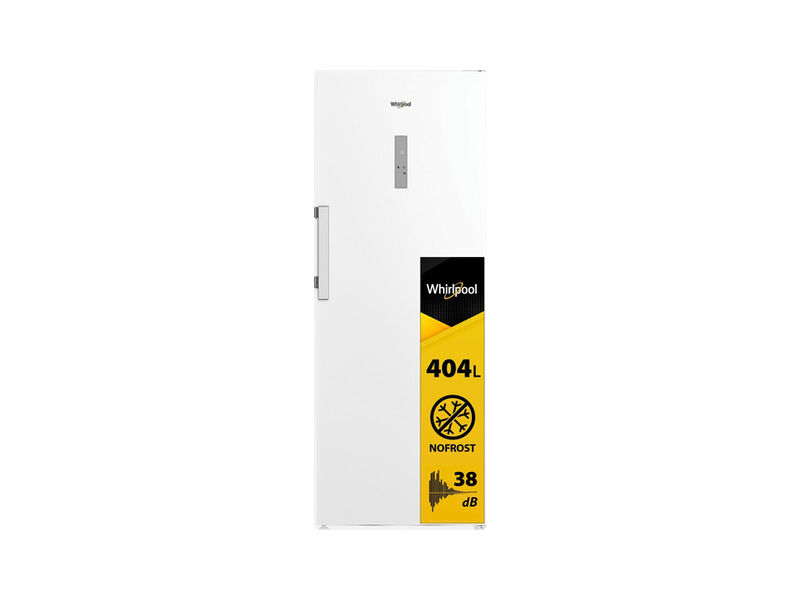
If regular defrosting is a chore you'd rather avoid for good, there's a solution: No Frost technology (sometimes called automatic defrost) keeps air circulating continuously inside the compartment through a fan system, which stops frost from forming on the walls in the first place. No more manual defrosting, ever.
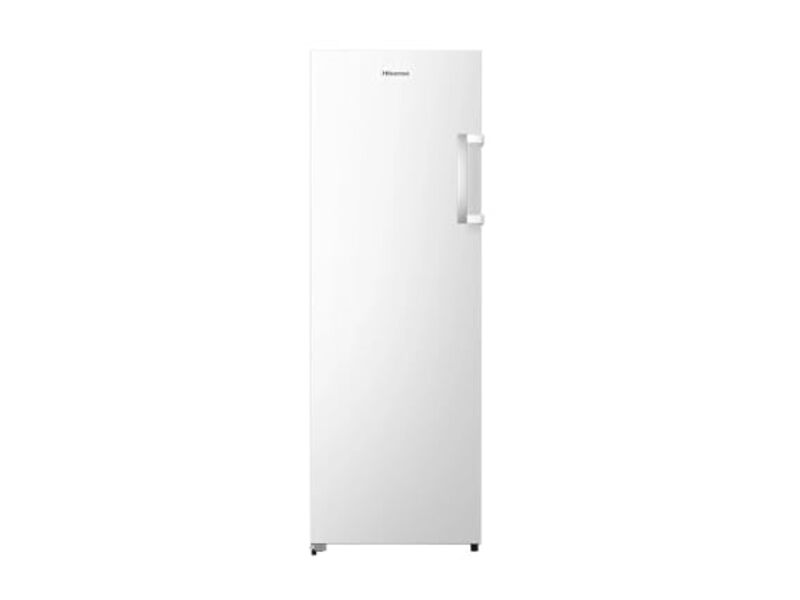
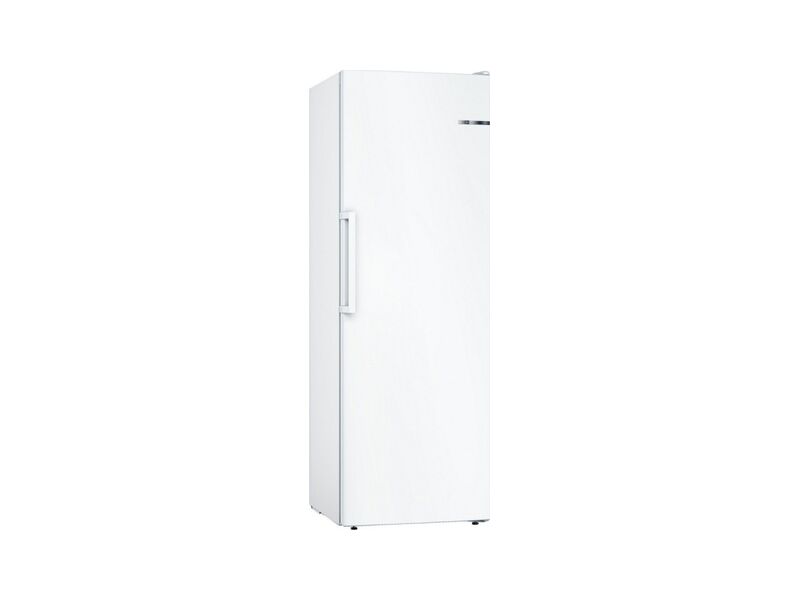
Our freezer selection includes several No Frost models, such as the Hisense FV298N4AWC or the Whirlpool WHFF6403W4E, worth comparing against a classic manual-defrost freezer like the CHiQ FCF142DE or the Bosch GSN33VWEP, cheaper to buy but requiring this regular defrosting.