Cool bag, soft cooler: what exactly are we talking about?
The term "insulated bag" covers a family of products that look very different from one another, yet share the same principle: holding a temperature through good insulation, with no electricity at all. Unlike an electric compressor or thermoelectric cool box, which draws power to produce cold continuously, a cool bag or a soft cooler only slows down the warming of contents that are already cold, most often thanks to ice packs.
On the ground, the line between the two names is mostly a matter of wording and size. A cool bag usually refers to a compact bag, built for a lunch or a small shop, while a soft cooler (or cooler bag) suggests a more generous capacity, sized for a beach day or a day of camping. Technically, both rely on the same build: an insulating lining (foam plus a reflective film), a resistant outer fabric and a watertight closure. Our Cool bag range and the Soft cooler sub-category actually feature very similar products, worth browsing without relying on the model name alone.
What capacity should you choose for your use?
The right capacity depends almost entirely on the intended use. Here are our benchmarks, built from the models we've tested:
| Use | Recommended capacity | Example |
|---|---|---|
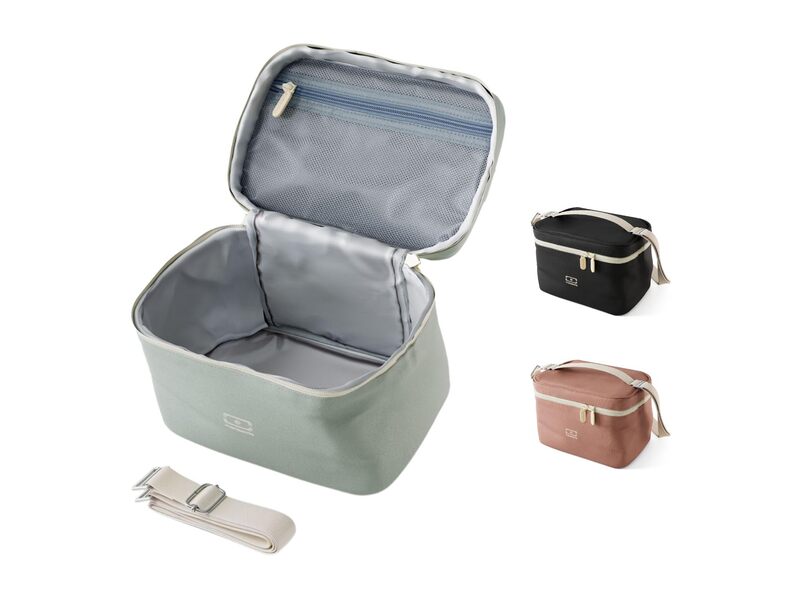
| Solo lunch at the office | 3 to 8 L | Monbento Arctic 5 L |
| Picnic for two or a small group | 8 to 15 L | Compact 8 L cool bag |
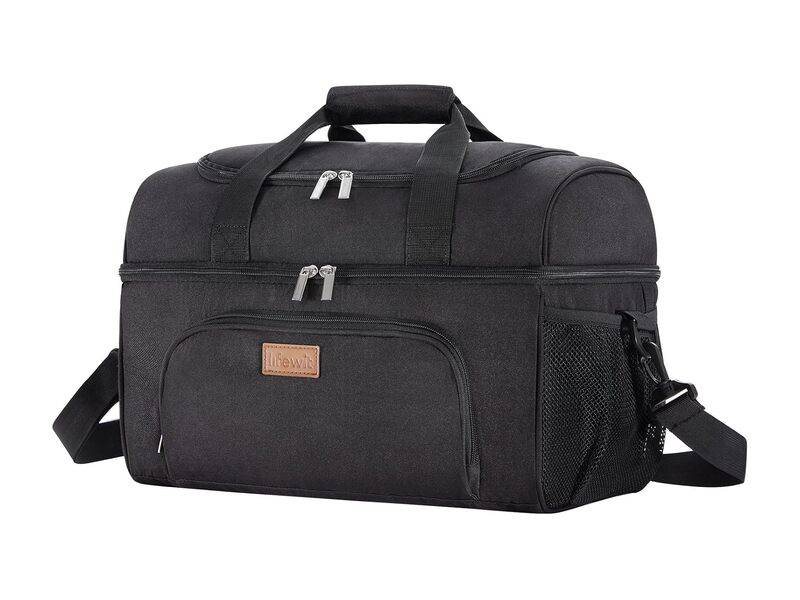
| Beach day or family picnic | 20 to 30 L | Lifewit 30 L |
| Delivering meals or groceries | 20 to 40 L, backpack style | 21 L backpack cool bag |
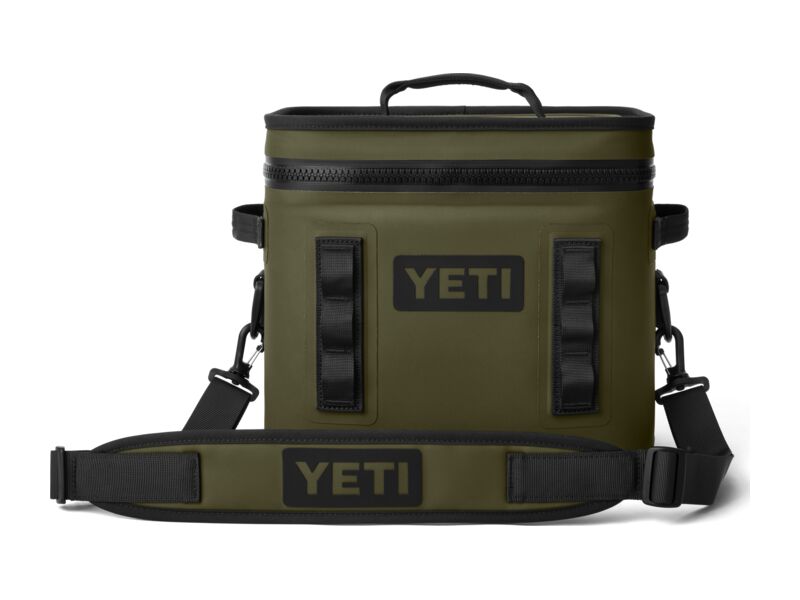
| Watersports or heavy use | 15 to 25 L, fully waterproof | Yeti Hopper Flip 12 |
A simple rule of thumb: allow around 3 to 4 L per person for a few hours' picnic, factoring in the space taken up by the ice packs themselves, often forgotten when choosing a size. For professional delivery use, it's best to go generous: a bag that's too tight forces containers to be squeezed against each other, which actually hurts cold air circulation between them.
Real ice retention: how long does it actually last?
This is the most misunderstood criterion: a cool bag, on its own, doesn't hold the cold for hours. What holds the cold are the ice packs or eutectic gel blocks placed inside; the bag simply slows down their melting and the overall warming of its contents. UK food safety guidance recommends keeping cold food below 5 °C during transport and eating ready to eat items within about 4 hours of leaving the fridge, to avoid ever breaking that cold chain between the shop and home (GOV.UK).
Without any chilled element added, most decently made cool bags only slow the warming for 1 to 3 hours before gradually reaching room temperature. With well distributed ice packs, on the other hand, the gaps between models become clear: a compact 8 L bag claims 6 to 8 hours, a 21 L backpack cool bag up to 16 hours thanks to its heat welded lining, and the Yeti Hopper Flip 12, loaded with 7 kg of ice during our kayaking tests, went past 24 hours without fully melting, a result close to some hard coolers of comparable size.
Materials and insulation: what really makes the difference
Three elements set a genuinely effective cool bag apart from a basic model that barely lasts the trip to the office.
The insulating foam first: its thickness, typically between 8 and 10 mm on serious models, directly determines the insulating power. Below 5 mm, the effect stays very limited. The inner lining next: made of PEVA (polyethylene vinyl acetate, a flexible food safe plastic free of PVC) or sometimes backed with a reflective aluminium film, it blocks radiant heat exchange on top of the foam's insulation, while staying waterproof and easy to wipe clean. Finally, the outer shell, almost always coated polyester or water repellent ripstop fabric, needs to resist abrasion and moisture without tearing at the first contact with sand or gravel.
The seams are worth a closer look too: a heat welded lining (panels fused together with heat rather than stitched) eliminates the tiny needle holes through which moisture and warm air can seep in, a real plus for both watertightness and ice retention. Premium models like the Yeti Hopper Flip 12 go further with a reinforced, near hermetic zip closure, a level of finish that explains a good part of the price gap with a basic cool bag.
Everyday practicality: carrying, watertightness, cleaning
Beyond thermal performance, it's often ergonomics that make the real difference in daily use. For an occasional trip, a reinforced handle and an adjustable, ideally removable, shoulder strap are plenty. As soon as the trip gets longer, walking to the beach or a delivery round on foot, the backpack style changes everything: padded straps, breathable mesh back panel, and both hands stay free. Our tests on a 21 L backpack cool bag clearly confirm the comfort gained over a twenty minute loaded walk, compared with a simple hand carried cool bag.
A few practical details are worth checking before you buy: separate compartments (handy for keeping hot and cold items apart in the same bag), an outer pocket for items that don't need to stay cold (keys, phone), and a closure that opens wide enough to load and unload without acrobatics.
On the cleaning side, most PEVA or food safe aluminium linings simply wipe clean with a damp sponge and mild soap, then air dry with the bag left open to avoid musty smells. Machine washing should only be considered if the manufacturer explicitly allows it for the outer shell: the insulating lining itself almost never survives a wash cycle without warping.
What budget should you plan for?
The cool bag and soft cooler market spans a very wide price range, from a basic model under £20 to a premium reference at several hundred pounds.
| Range | Budget | What it changes |
|---|---|---|
| Entry level | Under £25 | Decent insulation for short trips, thin lining, basic finish |
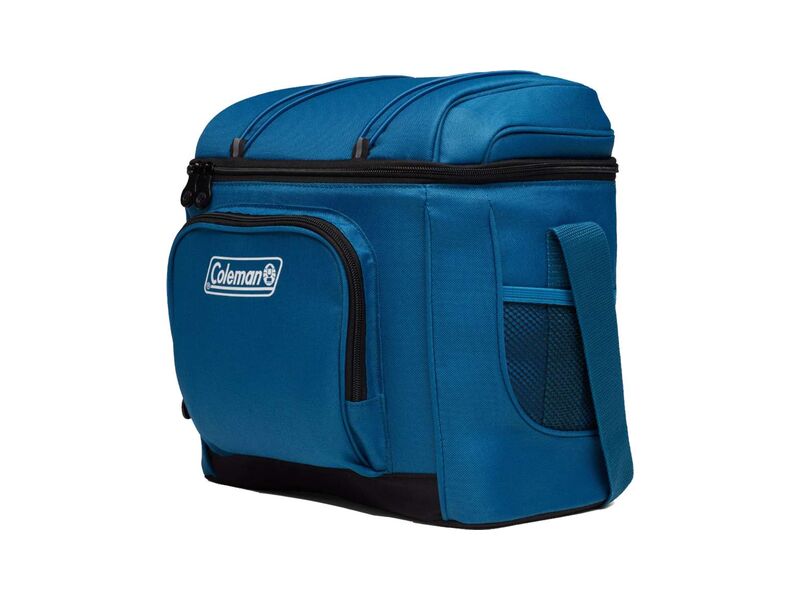
| Mid range | £25 to £45 | Thicker foam, heat welded lining, better ice retention (12 to 16 hours). Ex. Coleman Chiller 16 Can |
| Premium | Over £90 | Near total watertightness, dense insulation, ice retention beyond 24 hours. Ex. Yeti Hopper Flip 12 |
For occasional use, one beach trip a month or a daily office lunch, an entry level or mid range model is plenty: that's where the best performance to price ratio sits, with references around £30 to £40 that already hold 12 to 16 hours of cold with ice packs. The premium tier really pays off for watersports, heavy professional use, or whenever total watertightness matters, carrying fresh produce over several days on the road, for instance.
Cool bag, soft cooler or hard cooler: how do you decide?
By design, a cool bag or soft cooler stays less effective than a hard sided cooler with thick insulation, and far behind an electric compressor cool box able to drop below 0 °C regardless of the outside heat. That's not a flaw, just a deliberate trade off for lightness and easy storage: an empty cool bag folds flat and fits in a drawer, something a hard cooler can never do.
Switch to a passive hard cooler as soon as you need to keep food cold for several days in a row, or carry frozen goods over a long distance. Switch to an electric cool box if you need guaranteed continuous cold over several days without depending on melting ice packs, typically in a camper van or motorhome. For every other use, a day at the beach, a picnic, food delivery, a lunch at the office, a cool bag or soft cooler remains the simplest, lightest and most affordable choice.