Why the energy label changed in 2021
Since 1 March 2021, the energy label used on fridges, freezers, wine coolers and other cooling appliances has looked different. The old scale, running from A+++ (most efficient) to G (least efficient), was replaced by a tighter A to G scale, with no plus signs at all. This was not a cosmetic redesign: it was a full reset of the underlying calculation.
The reason is straightforward. The old scale had gradually become squeezed by technical progress: as manufacturers improved their products, almost every fridge on sale ended up rated A+, A++ or A+++, which made the label nearly useless for telling models apart. The new scale opens up headroom at the top again: at launch, class A is deliberately left almost empty, or very hard to reach, so manufacturers have genuine room to improve and shoppers can make a meaningful comparison.
The UK kept this same reformed scale after leaving the EU: labels on cooling appliances sold in Great Britain still run from A to G, using the same colour coding, under the retained Energy Information Regulations.
How a cooling appliance's energy class is calculated
Contrary to a common assumption, the energy class is not worked out purely from the raw yearly consumption in kilowatt-hours (kWh/year). It comes from an energy efficiency index (EEI), calculated by comparing consumption measured on a standardised test cycle against a reference consumption figure, itself set by a scale that accounts for the appliance's usable volume and its category (a plain fridge, a fridge-freezer combo, a chest freezer, a wine cooler, a mini fridge, and so on).
In practice, two appliances of very different sizes can land on the same letter if each uses a comparable share of the reference consumption expected for that category, relative to its own volume. That is why comparing the raw kWh/year figures of two very differently sized appliances tells you little on its own: it is more useful to compare their letters directly, or their consumption per litre of usable volume.
Reading the label: icons, figures, the QR code, and the UK twist
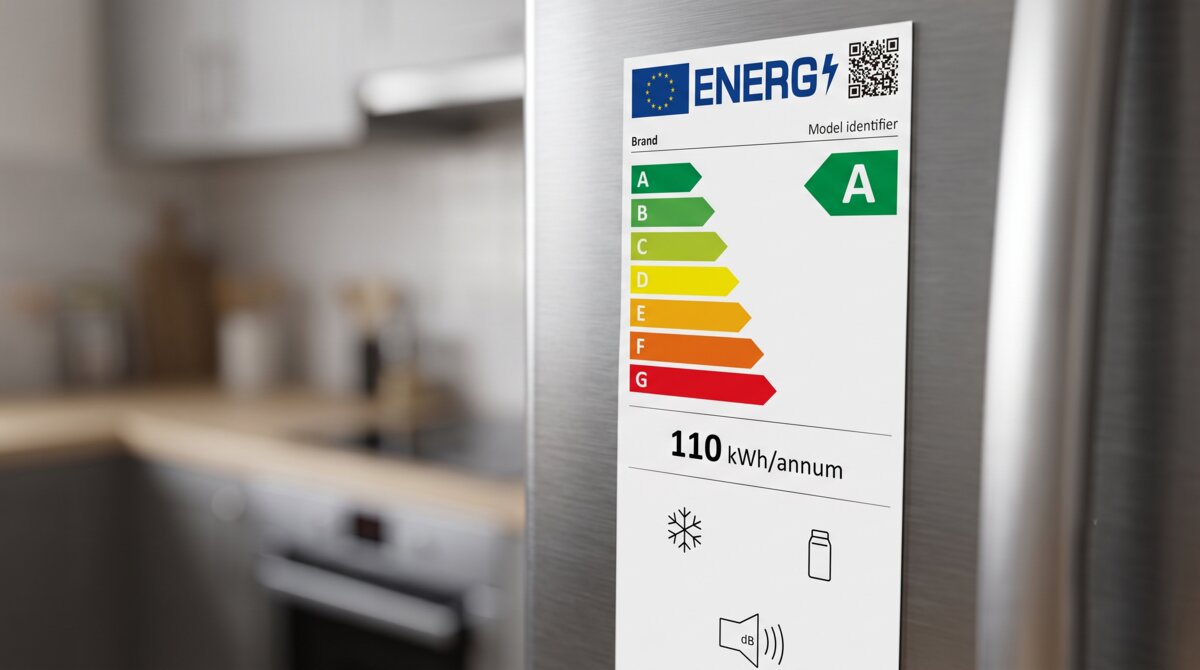
Once you know the layout, the current energy label is easy to read. At the top: the supplier's name and the model reference. In the middle: a vertical scale of seven letters, from A (dark green) to G (red), with a marker pointing to the appliance's actual class. Just below: the annual energy consumption in kWh, calculated on a standardised basis (a full year of continuous running for a fridge).
Icons round out the picture depending on the appliance type: total volume and volume per compartment (fridge, freezer), noise level in dB, and a climate class for appliances rated for specific regions. New since 2021: a QR code printed on the label links, once scanned, to the model's full record on EPREL (European Product Registry for Energy Labelling), the EU's public database of technical and environmental data for every appliance covered by the energy label.
One point worth knowing if you are shopping in the UK: since leaving the EU, Great Britain runs its own, separate energy labelling regime under the Office for Product Safety and Standards. The label itself still looks the same, same A to G scale, same colours, but it carries a UK flag rather than an EU one, is printed in English only, and its QR code points to a UK product information page rather than EPREL. Either way, the QR code remains the most reliable way to check a model's real declared figures, beyond what a retailer's product page sometimes shows.
What it really means in pounds per year
On paper, class A versus class F can feel abstract. Converted into money, the difference becomes concrete. Take a family fridge-freezer running 24 hours a day, all year round: at a typical UK electricity rate of around £0.27 per kWh (check your own tariff, rates vary), a model using 150 kWh a year costs roughly £40 a year to run, while an older model using 450 kWh a year costs roughly £122 a year. Over a ten to fifteen year lifespan, that gap comfortably outweighs the extra you would pay upfront for a better-rated model.
For an air conditioner, the sums work differently, because use is occasional rather than constant: an air conditioner typically runs for a few weeks a year, a few hours a day, unlike a fridge that runs non-stop. The energy class still matters, especially for heavy use or in a warmer part of the country, but its real impact on your annual bill depends above all on how many hours you actually run it, which varies far more from household to household than it does for a fridge.
Air conditioners: a different scale altogether
One point causes regular confusion: the 2021 reform did not cover every cooling appliance at once. It applied first to fridges, freezers, washing machines, dishwashers, TVs and light sources. Air conditioners are still governed by a separate regulation, which has not been rescaled the same way: it is still entirely normal to see a recent air conditioner rated A+, A++, even A+++, while a fridge can no longer go above plain A.
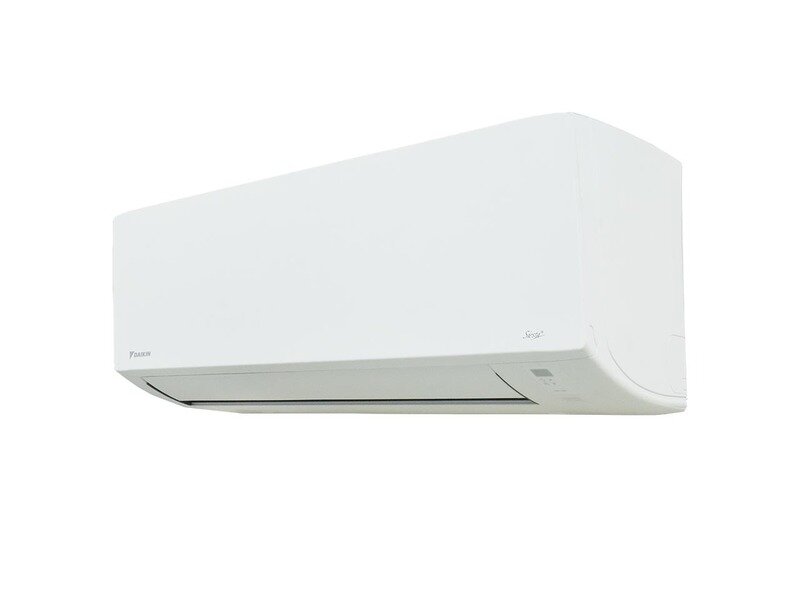
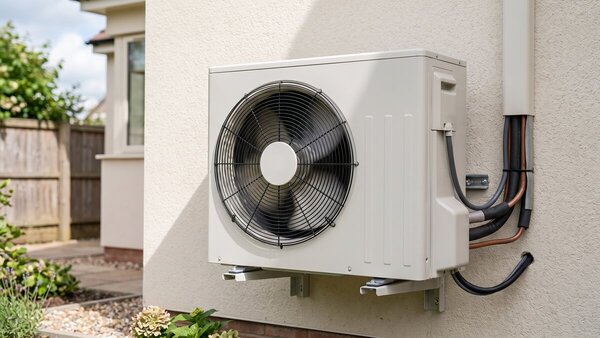
The Daikin ATXC35E fixed split unit is a good example: it carries an A++ rating on the older, air-conditioner-specific scale, which is not directly comparable to a fridge's class A. Keep that in mind whenever you compare appliances from different categories: the same letter, or the same number of plus signs, does not mean the same thing across appliance families.
A few real examples, from G to class A
To picture the gap between classes, here are a few examples drawn from our own catalogue, across different volumes and use cases.
| Appliance | Type | Volume | Energy class |
|---|---|---|---|
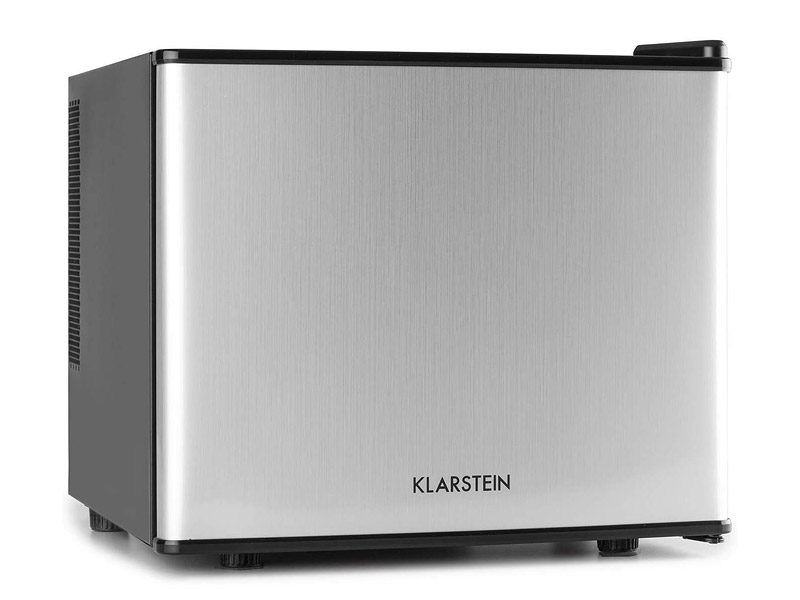
| Klarstein 17L Mini Fridge | Mini fridge | 17 L | G |
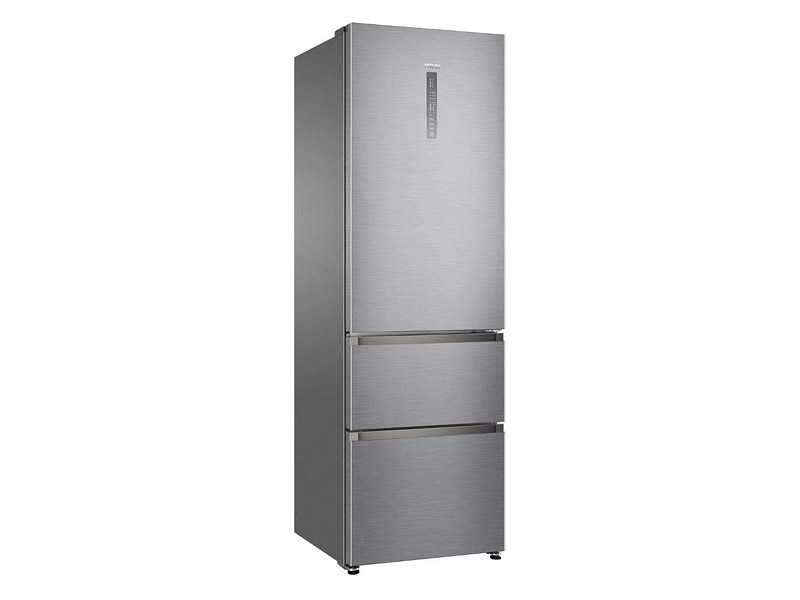
| Haier A3FE635CGJE | Fridge-freezer combo | 348 L | F |
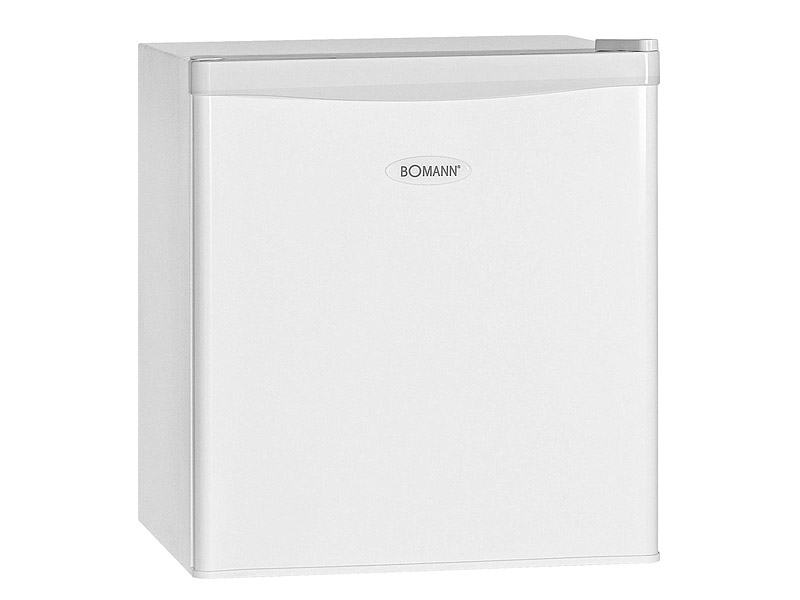
| Bomann KB 389 | Mini fridge | 42 L | A++ (old scale) |
| Daikin ATXC35E | Fixed split air conditioner | Not applicable | A++ (air conditioner scale) |
This sample gives a good sense of the real market: between a G-rated small mini fridge and a more recent, better-rated model, annual consumption can differ by a factor of three or four for comparable use. It also shows why it pays to check whether a rating sits on an older scale, or belongs to a different appliance category, before comparing two letters head to head.
The energy class is only one factor among several
The energy class remains an excellent starting point, but it does not tell the whole story of real day-to-day consumption. Several other factors weigh just as heavily, if not more, on the final bill.
A volume that genuinely suits the household matters a great deal: an oversized fridge uses more energy than it needs to, while an undersized one, packed to the brim or constantly overworked, loses efficiency compared with its rated figure. Everyday habits matter too: how often the door gets opened, the room temperature around the appliance, and enough clearance around the compressor for a built-in model to breathe. Finally, the appliance's age plays a role: a worn door seal or insulation that has degraded over the years can push real consumption noticeably above the figure printed on the original label.