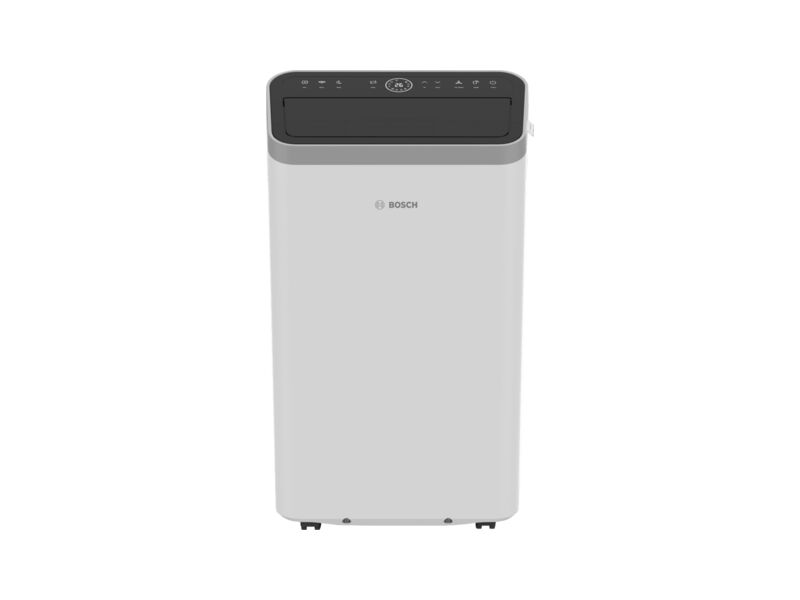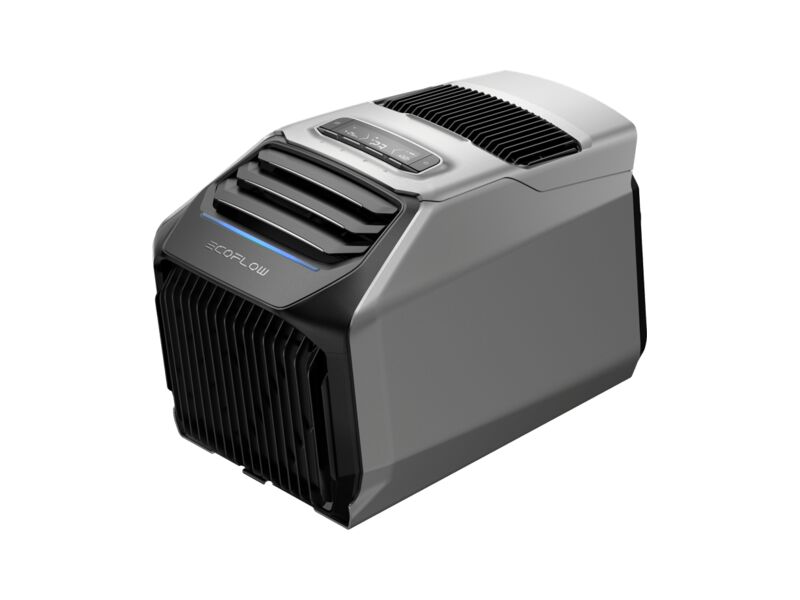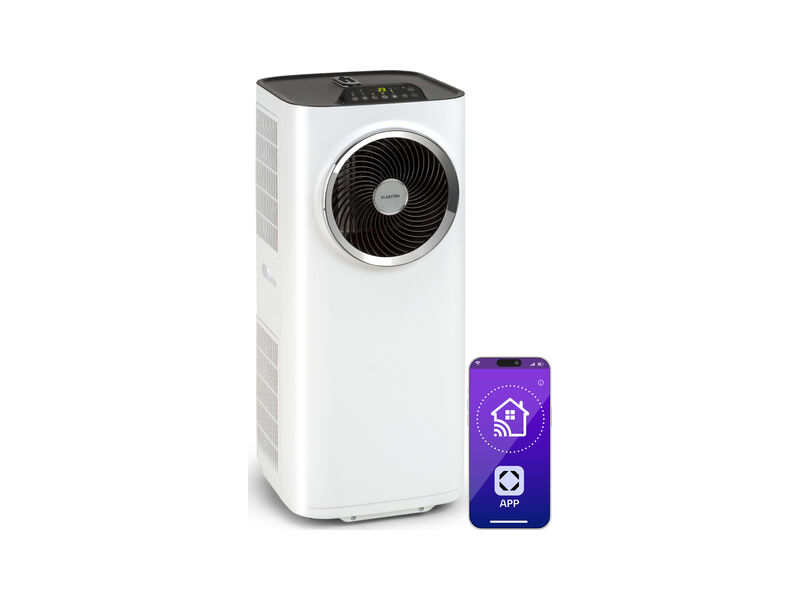
What exactly is R290?
The term R290 refers to a refrigerant that is nothing exotic: it is propane (chemical formula C3H8), the same gas used in camping bottles, purified to a grade dedicated to cooling. Inside an air conditioner or a fridge, it plays exactly the same role as any other refrigerant: it circulates in a closed circuit, absorbing heat on one side (the room or compartment) and releasing it on the other (outdoors), through the same compression cycle used everywhere.
What makes R290 stand out is its near-zero climate impact: its global warming potential (GWP) is only 3, against several hundred, sometimes several thousand, for the fluorinated gases it replaces (see the comparison table below). That is exactly why it now appears in more and more portable and fixed air conditioners, as well as in fridges and electric coolers.
Why is the EU forcing this change of gas?
This shift is not a marketing trend: it comes directly from an EU regulation, Regulation (EU) 2024/573, known as “F-gas III”, which took effect on 11 March 2024 and replaces the previous 2014 regulation on fluorinated gases.
Adopted by the European Parliament and the Council, the text organises a gradual reduction of quotas for fluorinated gases allowed on the EU market, with a clear goal: near-total elimination by 2050, in line with the European Green Deal. In practice, HFC quotas (the most common family of fluorinated gases, such as R410A) are already set to fall by close to 49% in 2027 compared to levels under the previous regulation.
For air conditioners and heat pumps specifically, the text also sets GWP thresholds that can no longer be exceeded from certain dates, category by category. Several professional analyses of the text converge on a deadline around 2027 for low-power monobloc and multi-split units (up to 12 kW) using a high-GWP fluorinated gas, and around 2029 for standard wall-mounted split units. R290 itself is not even covered by these thresholds: since it is not a fluorinated gas, it falls entirely outside the F-gas regulation, making it a safe long-term bet for manufacturers.
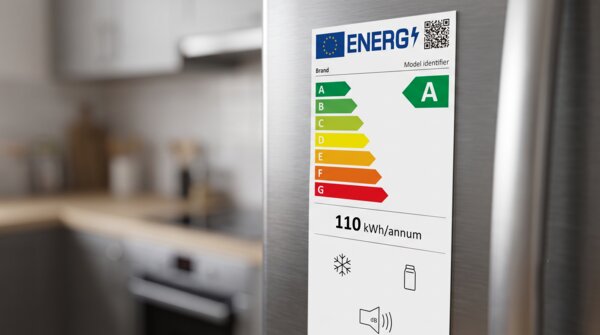
A lesser-known part of the same regulation: since 1 January 2025, new labelling rules also require the refrigerant type and its quantity in kg to be clearly stated on the appliance and in its documentation. This transparency makes it easier to compare models, even for an everyday shopper at the point of purchase.
R290, R32, R410A: which has the smallest climate footprint?
| Refrigerant | GWP (global warming potential) | Safety class | Where it is used |
|---|---|---|---|
| R410A | about 2,088 | A1 (non-flammable) | Older air conditioners and heat pumps |
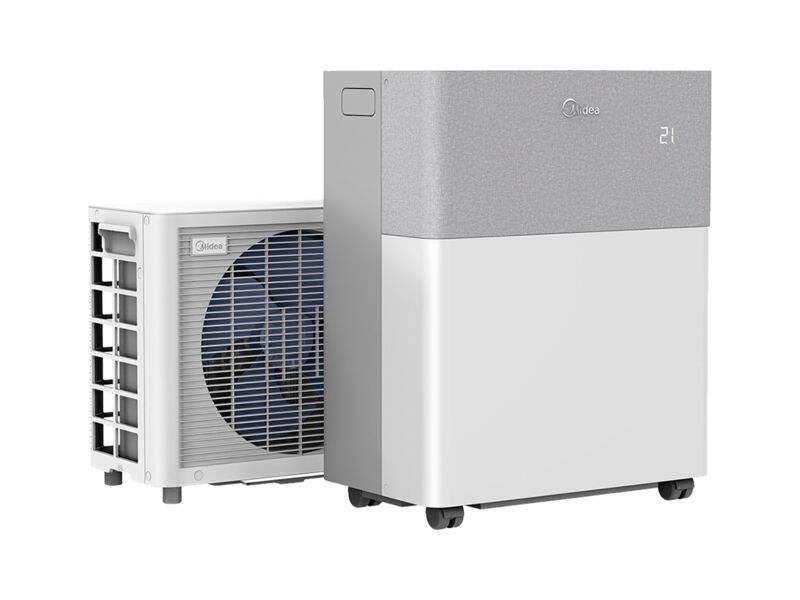
| R32 | 675 | A2L (mildly flammable) | Many recent air conditioners, including mini-splits like the Midea PortaSplit |
| R600a (isobutane) | about 3 | A3 (highly flammable) | Domestic fridges since the 1990s |
| R290 (propane) | 3 | A3 (highly flammable) | The most recent portable or fixed air conditioners and fridges |
The R600a used for decades in our fridges is actually a close cousin of R290: same chemical family, near-zero GWP, same flammability class. Domestic refrigeration has already proven this type of gas works, well before air conditioning adopted it at scale.
The trade-off: a gas classed A3
A GWP of 3 comes with a trade-off: propane is a highly flammable gas, classed A3 under the standard that rates refrigerants by toxicity and flammability. Unlike R410A or R32, an R290 leak in a poorly ventilated room can create a flammable atmosphere if it meets an ignition source.
This does not mean an R290 appliance is dangerous in normal use: manufacturers limit the gas charge on board (often a few hundred grams, well below risk thresholds) and follow strict design rules (hermetic circuit, leak sensors, directed ventilation). It is mainly at the installation stage that precautions matter.
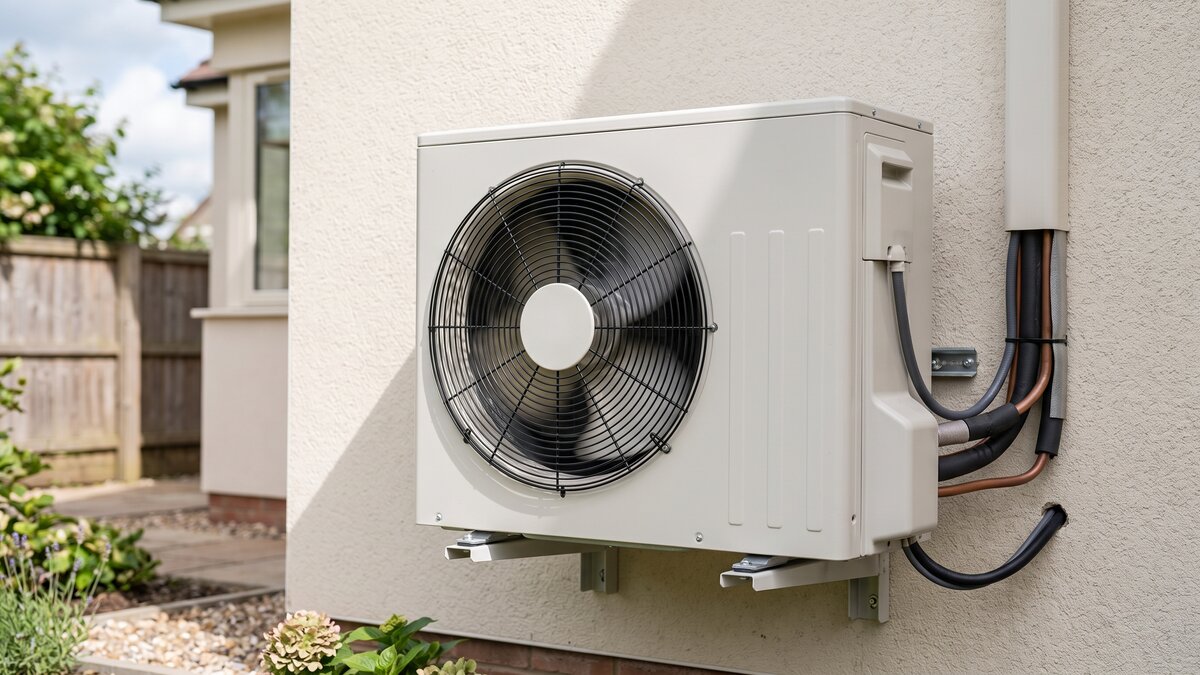
For a plug-and-play portable monobloc air conditioner, these constraints stay largely invisible to the user: just follow the manual. For a fixed split air conditioner running on R290, however, a trained installer qualified for A3 refrigerants (charging, vacuum pulling, leak detection) remains essential: this is not a DIY job, unlike setting up a monobloc unit.
This recall does not concern air conditioners or fridges from our own range (these are monobloc heat pumps, a different appliance family), but it illustrates well the core trade-off of R290: an excellent climate footprint, in exchange for real vigilance over installation height and placement.
What about portable mini-splits like the PortaSplit?
A new generation of compact portable air conditioners, such as the Midea PortaSplit, adds a further wrinkle. These units split the mechanics into two parts (an outdoor section with the compressor, an indoor section) without any fixed installation, and today they mostly run on R32, with a reduced gas charge (around 0.62 kg).
One technical question is still debated in the trade press: depending on whether such a unit is classed as a sealed monobloc or a bi-block system under the F-gas regulation, the applicable GWP deadline may differ. We do not consider this classification publicly settled with certainty for this whole appliance category yet, so we would rather stay cautious than state a precise date we could not verify with confidence in the regulatory text. What is certain, though, is that the underlying trend points the same way as for other air conditioners: towards ever-lower GWP gases, with R290 leading the pack.
What this actually changes for your purchase
In practice, there is no need to sort models by refrigerant gas yourself when buying today: every appliance currently on the market already complies with current rules. Here is instead what this rule change means day to day:
- You do not choose the refrigerant gas: it is set by the manufacturer per model. It is listed on the appliance's rating plate (often on the back or under the cover), usually as “R290” or “R32” followed by the charge in kg.
- An R290 appliance is not more fragile than an R32 or R410A one: safety comes from the design, not from the gas choice itself.
- Always follow the installation manual to the letter: minimum height, distance from ignition sources (sockets, switches, flames), room ventilation. These rules exist precisely to manage the risk specific to class A3.
- Fewer and fewer old-standard options: R410A models are gradually disappearing from the new-appliance market, replaced by R32 or R290 depending on power and range.