Does a portable AC without an exhaust hose really exist?
Not in the strict sense, no. An air conditioner works by pulling heat out of indoor air and releasing it outside: that's the basic principle of the refrigeration cycle, the same one that cools a fridge. That heat has to go somewhere, there's no physical way around it.
What actually differs from one unit to another is where and how that heat gets released. And that's exactly where the confusion behind “air conditioner without an exhaust hose” comes from: three very different families of appliances each claim, in their own way, to skip it.
The three technologies people confuse under this name
| Technology | How heat is released | Real air conditioning? |
|---|---|---|
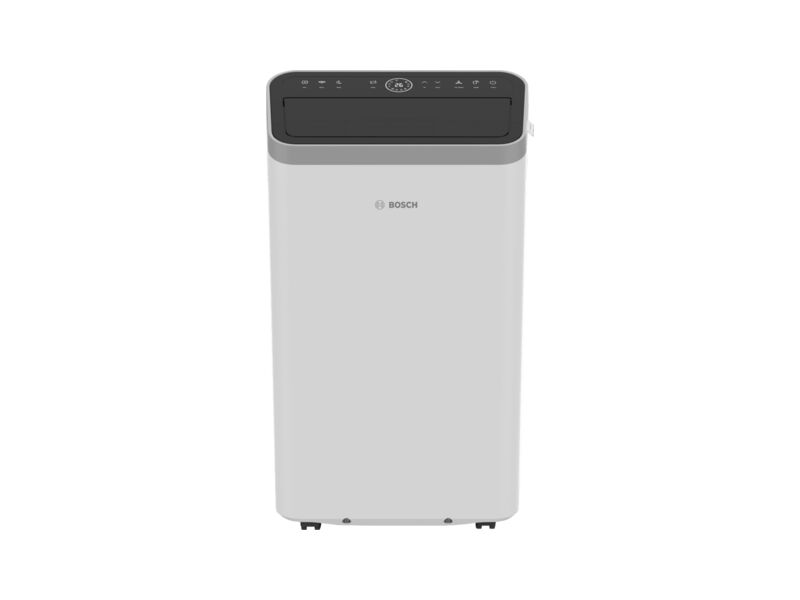
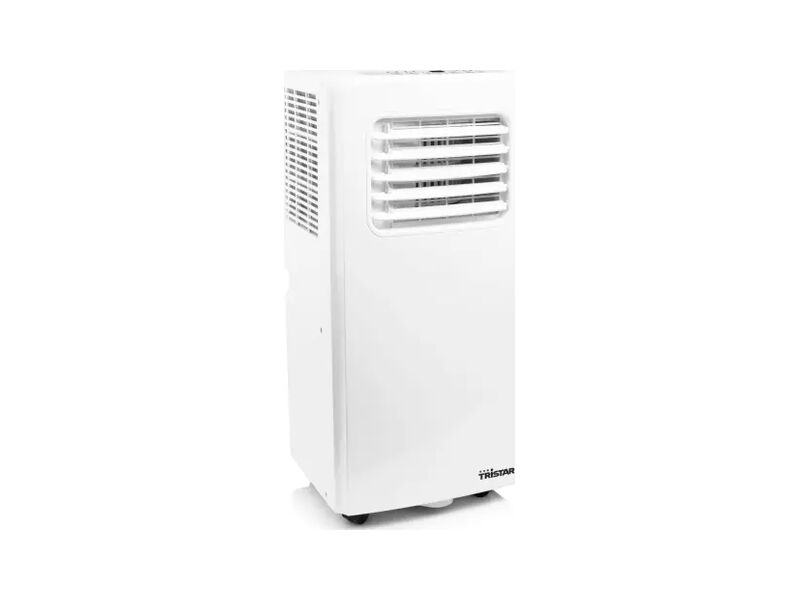
| Classic single-hose unit | Hot air hose run through a partly open window or a sealing kit | Yes |
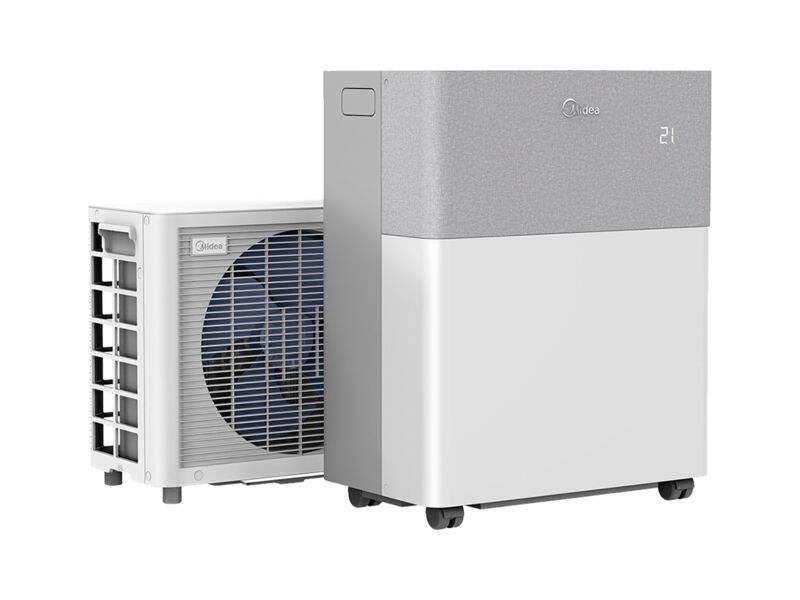
| Portable mini-split (PortaSplit-style) | Compressor sits outside, only a thin refrigerant line crosses the window | Yes |
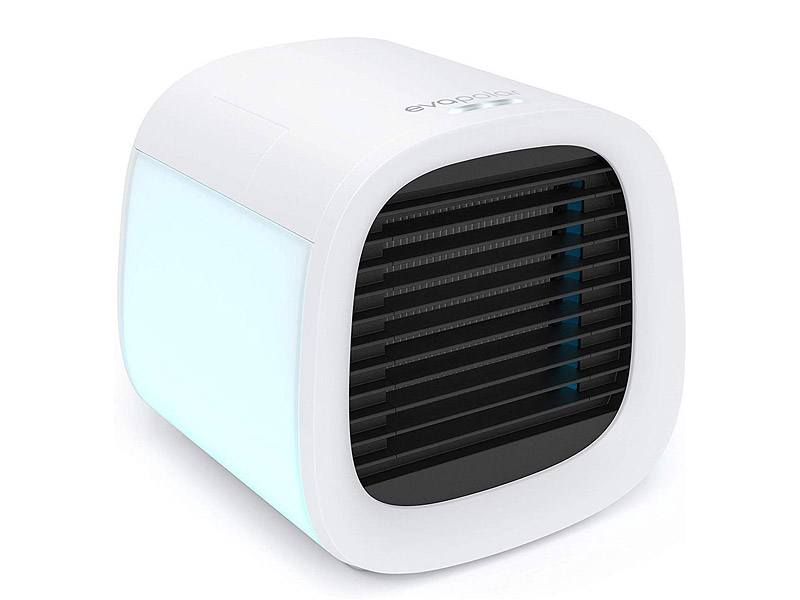
| Evaporative air cooler | None, but no real heat is removed either | No |
The classic single-hose unit is still the most common and the cheapest to buy, but it needs its hose. The portable mini-split is the only technology that genuinely delivers on an indoor unit with no hot-air hose. The evaporative cooler, meanwhile, isn't air conditioning in the proper sense: it cools air through water evaporation, a completely different principle.
How a portable mini-split like the PortaSplit works
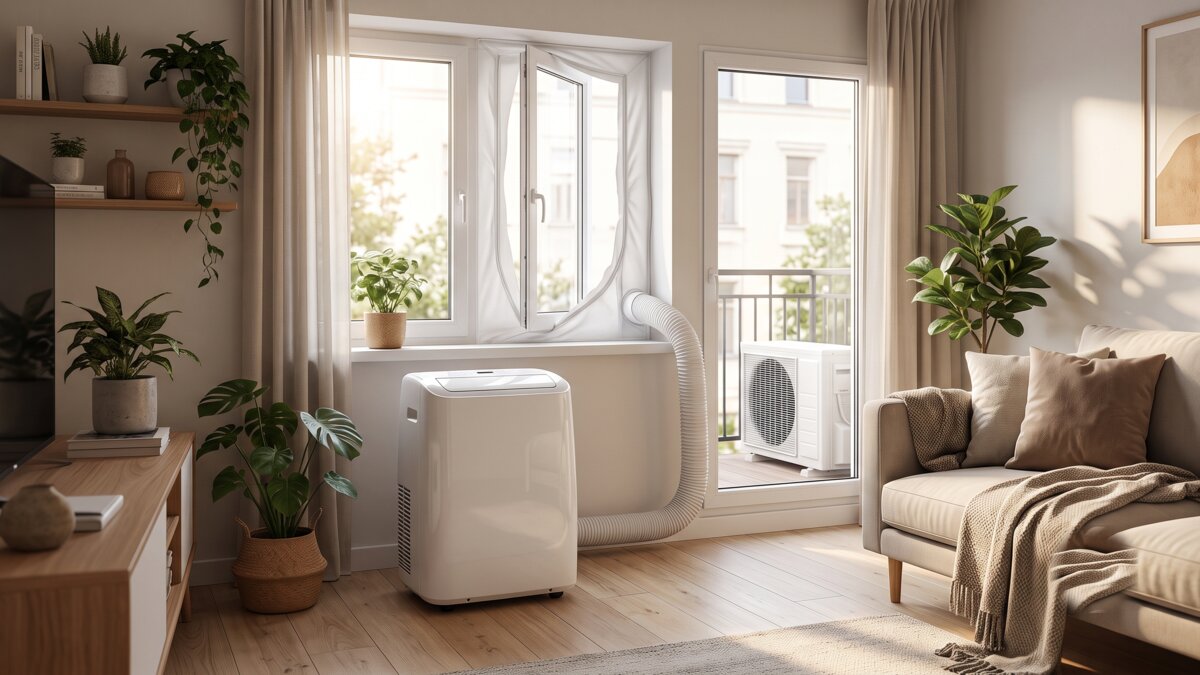
A classic split air conditioner splits its mechanics into two fixed units: a discreet indoor unit and an outdoor unit bolted to a wall. A portable mini-split like the Midea PortaSplit 12000 BTU follows the same idea without any fixed installation: the outdoor unit, which houses the compressor (the noisiest part), simply sits on a windowsill or balcony, while the indoor unit stays on the floor in the room. Only a thin refrigerant line connects the two, routed through a narrow window kit.
So it's not a marketing sleight of hand: it's a genuinely different architecture, one that simply moves the main nuisances (noise, hot exhaust air) outside the room instead of venting them through an indoor hose.
The evaporative cooler: the tempting but wrong answer
Many “air conditioner without an exhaust hose” searches actually end up on evaporative air coolers, like the Evapolar evaCHILL. Their principle has nothing to do with an air conditioner: water evaporates through a damp pad as air is pushed through it, which lowers the air's temperature slightly, similar to how the air feels cooler near a fountain.
No compressor, no refrigerant gas, so indeed no exhaust is needed. But the effect is limited to a few degrees, drops sharply in already humid air, and the appliance adds moisture to the room rather than removing it. Handy alongside a fan in dry weather, it's not a substitute for real air conditioning during a humid heatwave.
Fitting a classic portable AC without much hassle
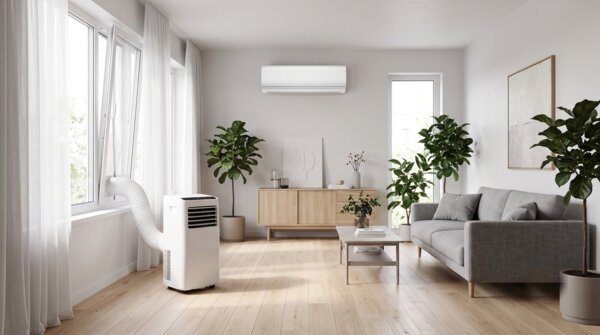
For a classic single-hose unit like the Bosch Cool 4000 or the Tristar AC-5477, the supplied hose usually just runs through a partly open window. A window sealing kit (a flexible or rigid panel cut to size, either included or sold as an accessory) noticeably improves the result:
- Less cool air lost through the gap left by the partly open window.
- Less noise and fewer insects getting in through that same gap.
- A reversible setup in a few minutes, no drilling or work on the building itself: a real plus if you're renting.
How to choose based on your home
Standard window, tight budget, occasional use: a classic single-hose unit with a sealing kit remains the simplest and cheapest choice, hose aside. Want a fully clear room and a bigger budget: the portable mini-split is the only real alternative that doesn't compromise on hot air staying out of the room. Dry climate, light top-up cooling, very tight budget: an evaporative cooler can be enough, as long as you accept its limits against humid heat.
Either way, cooling power remains the decisive factor before the exhaust question even comes up: an undersized unit disappoints no matter which technology it uses.