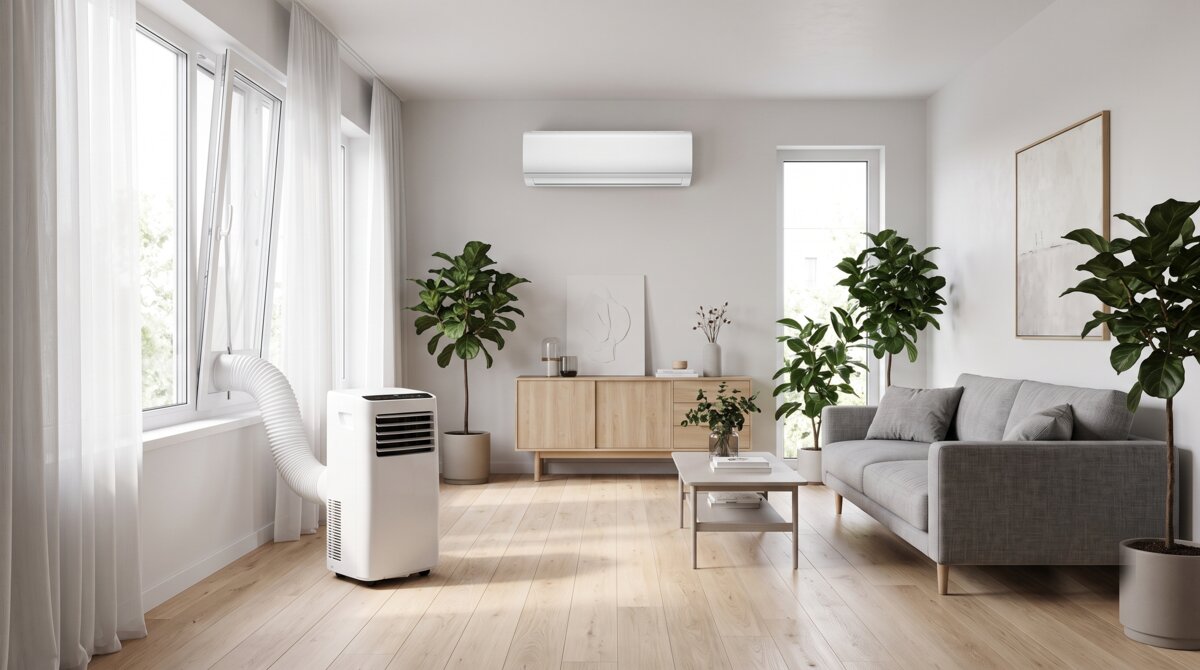
Two very different ways to cool a home
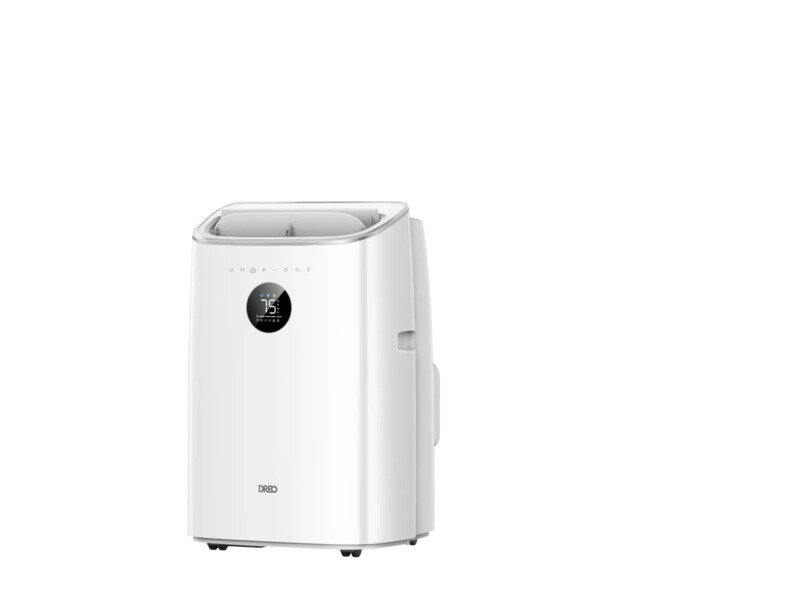
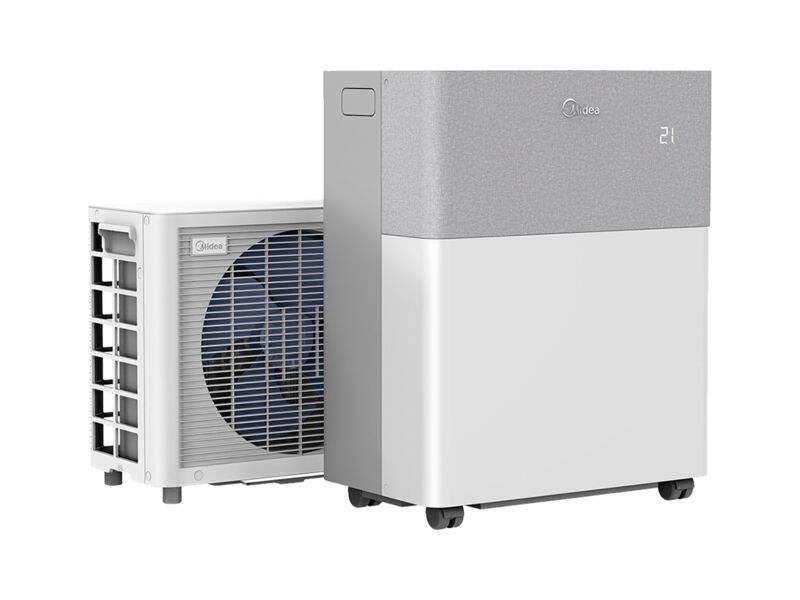
A portable air conditioner (single-unit) packs all its mechanics, compressor, condenser and evaporator, into one floor-standing unit, connected to the outside by a simple exhaust hose run through a partly open window or a dedicated sealing kit. No fixed installation, no work on the building itself.
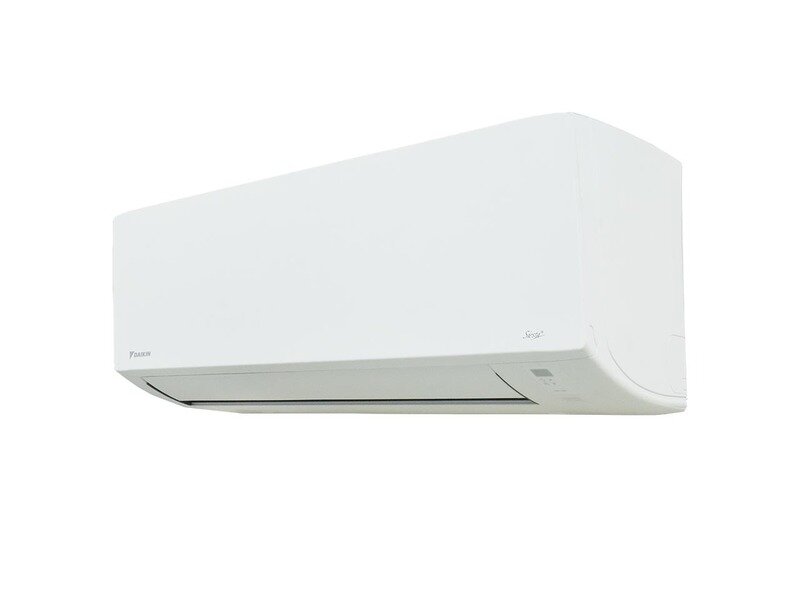
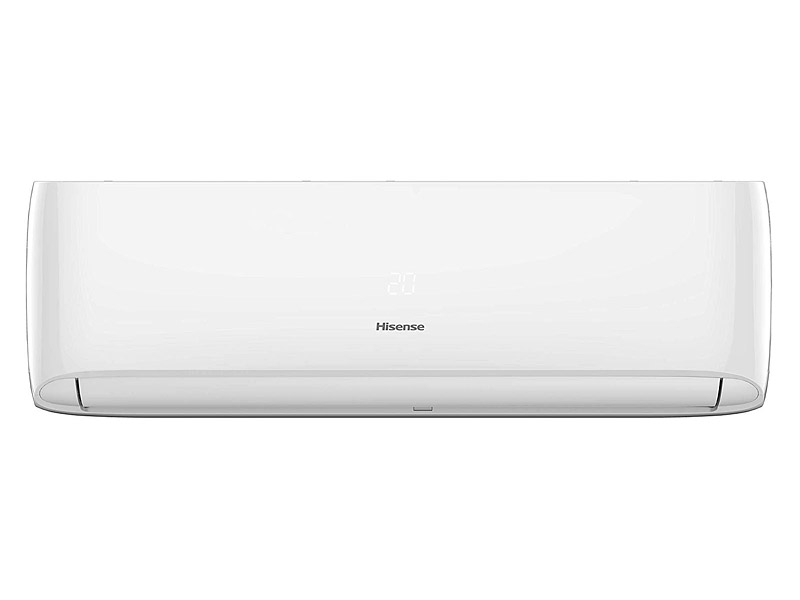
A fixed split air conditioner splits the mechanics into two units linked by a permanently installed refrigerant line: a discreet indoor unit (wall-mounted, console or ducted) that blows cool air into the room, and an outdoor unit that releases the heat outside. That split fundamentally changes almost every criterion that follows.
Real cooling efficiency
This is the most significant gap between the two solutions. A portable air conditioner loses some efficiency by design: to expel heat, it draws part of the room's already-cooled air through the hose, creating a slight negative pressure that gets replaced by hot outside air seeping in through gaps. On top of that, the compressor itself, sitting right in the living space, gives off its own operating heat, which it has to partly compensate for itself: overall, a single-unit spends a non-trivial share of its power cooling... its own operation.
A fixed split air conditioner suffers from none of these drawbacks: the compressor, the main heat source, sits entirely outside the home. The full cooling power of the indoor unit therefore goes toward cooling the room, for real efficiency noticeably higher at the same rated output, and a much faster temperature drop.
Purchase and installation cost
The portable air conditioner wins clearly here: no installation cost, an accessible entry price, generally between £280 and £650 for an effective model. It can be moved, stored away over winter, and leaves no mark on the property, a real plus when renting.
A fixed split air conditioner represents a bigger investment: expect often between £900 and £2200, installation included, depending on power and how complex the job is. This installation involves handling refrigerant, an operation strictly regulated and one that must be carried out by a certified professional, in the UK as across the rest of Europe. It's a substantial budget, but one justified by noticeably higher efficiency and discretion over the long run.
Flexibility of use
A portable air conditioner moves from room to room as needed, bedroom at night, living room during the day, and requires no long-term commitment: it's the ideal solution for a rented home, seasonal use, or simply trying out air conditioning before investing further.
A fixed split air conditioner is, by contrast, a lasting investment tied to the property: it adds value when selling or renting out, but requires either owning the home or getting the landlord's agreement to install the outdoor unit. Once fitted, it stays in place and cools its dedicated room continuously, with no hassle.
Power draw and energy class
At the same rated output, a portable air conditioner draws more power for a weaker result, a direct consequence of the efficiency losses described above. Its energy label is often less favourable, too, than a split unit of comparable power.
A fixed split air conditioner, especially recent Inverter models that continuously modulate their power instead of running fully on or off, generally carries some of the best energy ratings on the market, with markedly higher seasonal efficiency. Over repeated intensive use each summer, the gap in cumulative power draw can make up a significant share of the electricity bill. Energy efficiency criteria for air conditioners are detailed by the European Commission, worth checking before any purchase.
Noise level
A portable air conditioner houses its compressor right in the living space, resulting in a fairly noticeable noise level, generally between 50 and 65 dB(A), a constant background hum that can disturb sleep or concentration over time.
A fixed split air conditioner moves the main noise source, the compressor, outside the home. The indoor unit itself only has a fan, and typically runs very quiet, often between 19 and 26 dB(A) on recent models, a level of comfort a single-unit simply can't match.
Our comparison table
| Criterion | Portable (single-unit) | Fixed (split) |
|---|---|---|
| Cooling efficiency | Reduced (hose, air drawn in) | Optimal, outdoor compressor |
| Purchase and installation price | £280 to £650, no installation | £900 to £2200, professional installation required |
| Flexibility | Movable, suits renting | Fixed, lasting investment |
| Power draw | Higher for the same result | Optimised, especially Inverter models |
| Noise level | 50 to 65 dB(A) | 19 to 26 dB(A) indoors |
| Best suited for | Renters, occasional or seasonal use | Owners, regular or heavy use |
Which profile suits which air conditioner?
For a renter, occasional or seasonal use, or simply a tight budget, a portable air conditioner remains the simplest and most sensible choice: no installation, no commitment, a solution you can pull out of the cupboard as soon as the first heatwave hits and put away come winter. Our range of air conditioners features several effective portable models for this kind of use.
For an owner, regular or heavy use spread over several months each year, or in a region where heatwaves are now common, a fixed split air conditioner is a far better investment over time: the higher upfront cost is offset by noticeably greater efficiency, discretion and longevity.