Hard cooler and soft cooler: two different families, two different jobs
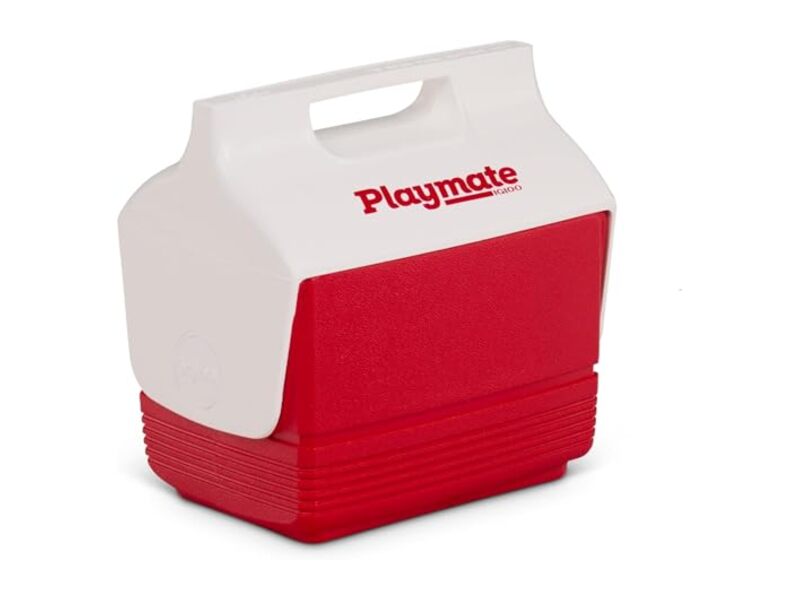
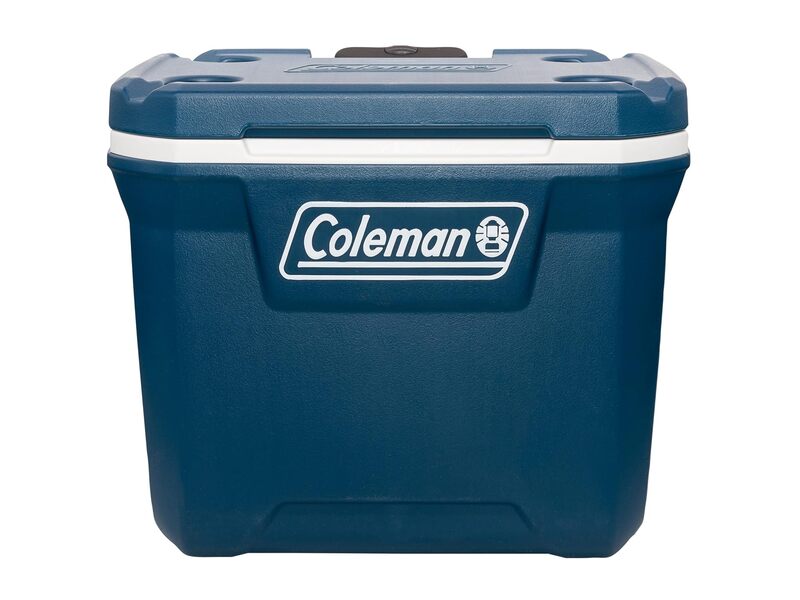
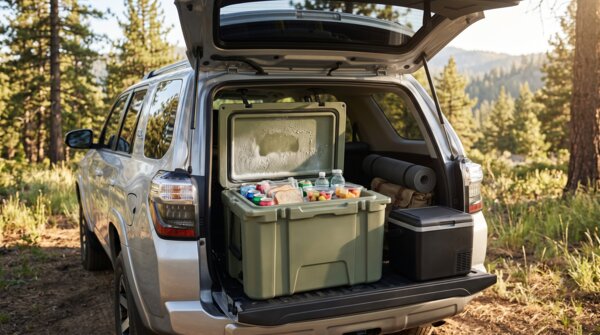
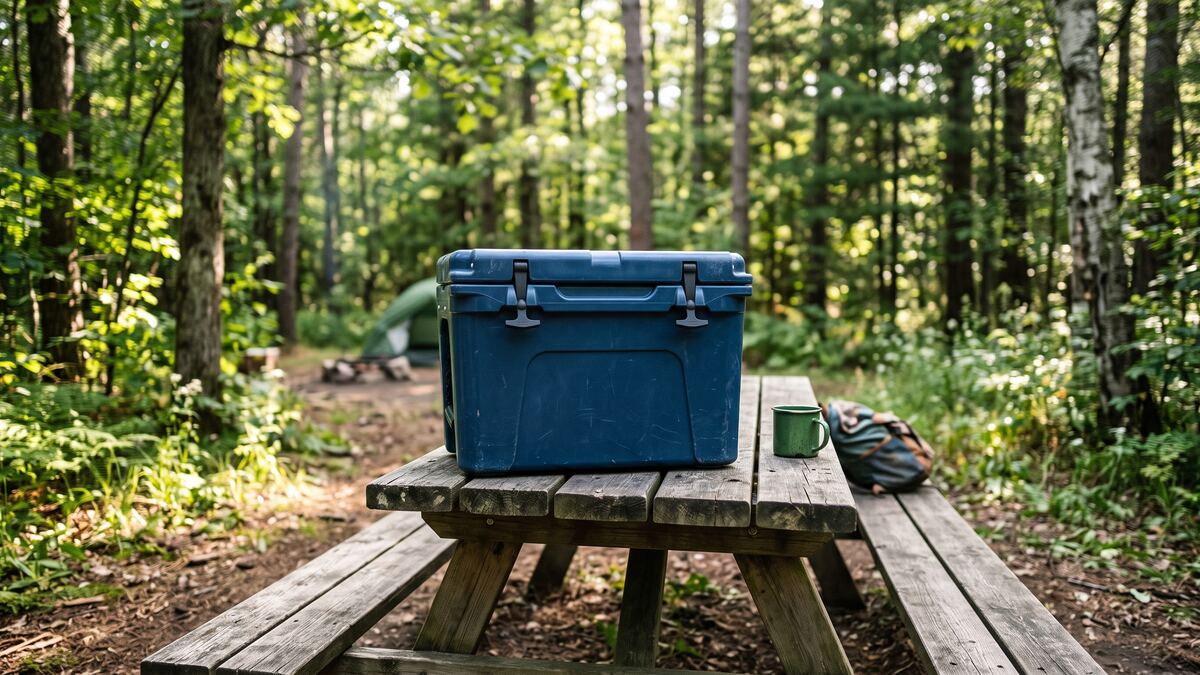
The word « cooler » actually covers two very different objects, with different builds and different natural uses. A hard cooler follows the classic insulated-box design: a polyethylene or polypropylene shell, thick insulating foam (often 25 to 40 mm of PU or expanded polystyrene) moulded into the walls, and a lid that clips or locks shut. It is the historic camping format, sold as a compact carry model (a small model you carry by hand) or as a large wheeled chest (a 40 to 50 L box on wheels) for family outings.
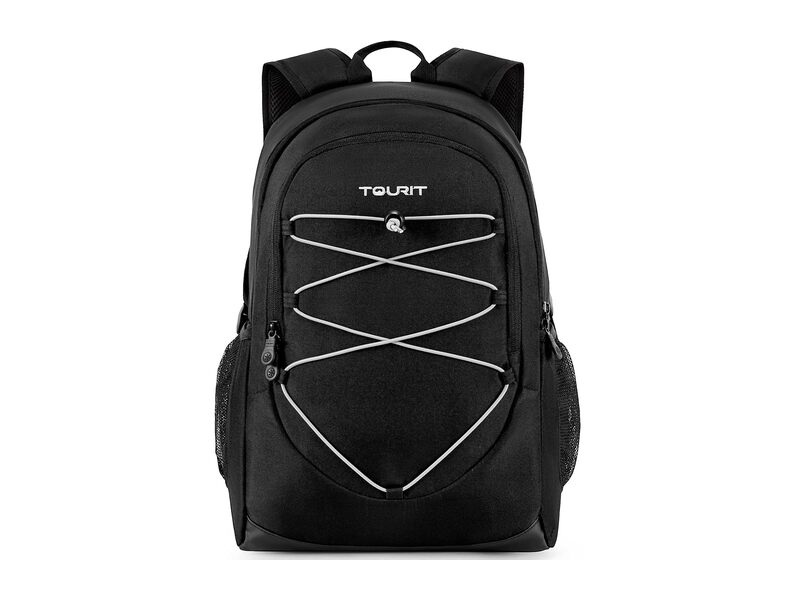
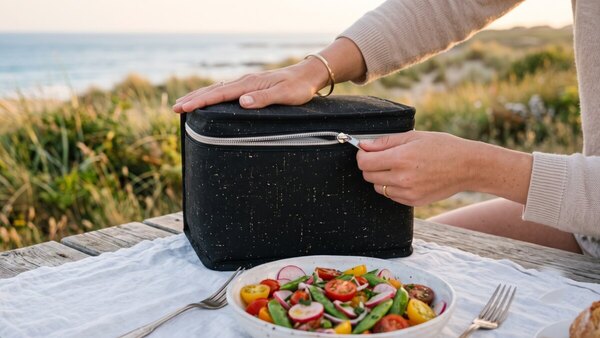
A soft cooler looks more like a bag: a fabric shell (nylon, coated polyester) lined with a thin 6 to 10 mm layer of insulating foam and a watertight PEVA or heat-welded aluminium interior. You will find it as a small soft cooler bag for a packed lunch, or as a roomier insulated backpack for the beach or food delivery. It folds flat when empty and stores in a drawer, something a hard cooler never allows.
What real-world autonomy can you expect for an occasional trip?
This is the most misunderstood criterion, yet the one that weighs most on how happy you are with the purchase. Neither cooler produces cold on its own: their job is to slow down the warming of the ice or ice packs placed inside. The thicker the insulation, the longer the ice retention, for the same amount of ice.
| Type | Insulation thickness | Typical ice retention | With block ice |
|---|---|---|---|
| Soft cooler (cool bag) | 6 to 10 mm | 6 to 12 hours | Up to 24 hours on a premium model |
| Compact hard cooler (20 to 30 L) | 20 to 30 mm | 24 to 36 hours | 2 days |
| Large hard cooler (40 L and up) | 30 to 40 mm | 36 to 48 hours | 3 to 5 days |
For a few hours at lunch or half a day at the beach, a soft cooler packed properly with ice is more than enough: the gap in autonomy with a hard cooler really only shows once a full night passes without topping up the ice.
What budget do you need to get started?
Starting price is the number one argument in favour of the soft cooler for occasional use: it is structurally cheaper to make, with no moulded shell or reinforced hinges, and the market reflects that gap.
| Segment | Volume | Typical budget |
|---|---|---|
| Small cool bag | 5 to 10 L | £15 to £30 |
| Family soft cooler or backpack | 20 to 30 L | £30 to £60 |
| Compact hard cooler | 20 to 30 L | £30 to £55 |
| Large wheeled hard cooler | 40 to 50 L | £80 to £150 and up |
On small volumes, the two families overlap almost completely: a soft cooler and a compact hard cooler can carry a similar price tag. The gap really opens up on large volumes, where the rigid shell, wheels and toughness add a genuine premium.
What criteria actually matter for your trips?
The right choice depends less on the technology than on the real use case. A few practical pointers for occasional use:
- Solo lunch or picnic, a handful of trips a year: a small 5 to 8 L cool bag is enough, light, compact and cheap.
- Beach day or family picnic: a 20 to 25 L cooler backpack frees up your hands for the rest of the gear, with enough autonomy for a full day if you top up the ice on arrival.
- Light camping weekend, no power available: a compact hard cooler holds without topping up for two days, a real asset when the nearest ice is twenty minutes away.
- Car transport, boot already packed: a soft cooler slots into an irregular gap once full, while a hard cooler keeps its fixed footprint even half empty.
One simple rule of thumb: past 5 to 6 trips a year, or as soon as a night without access to fresh ice is on the cards, the hard cooler's autonomy becomes a genuine argument, not just a comfort.
Why autonomy also matters for food safety
A cooler's ice retention is not just about comfort: it is also a food safety issue. Health authorities remind us that the cold chain should never be broken for more than two hours at room temperature for perishable food, and that the safest storage zone sits between 0 and 4 °C (32 and 39 °F).
In practice, a poorly insulated soft cooler that warms up after four or five hours is no problem for drinks, but becomes a real risk for cold cuts or a composed salad carried around for a full day. It is one more reason to match your cooler choice to the real length of the trip, not just its price tag.
Toughness, upkeep and lifespan: does a hard cooler really last longer?
Lifespan is another point that pulls against buying on price alone. A polyethylene hard cooler shell, rinsed properly after use and stored away from prolonged direct sunlight (which weakens plastic over time), routinely lasts ten years or more without structural damage: no zip, no seam, no lining to repair. The main thing worth checking now and then is the lid seal.
A soft cooler depends more on the quality of its zip and interior lining: these are the two points that tend to fail first, usually after three to seven years of regular use. Ademe, the French environment and energy agency, points out that extending the working life of everyday equipment remains one of the most favourable levers, both for household budgets and for the environmental footprint of a purchase, a criterion worth weighing at the moment you buy, not only when you are ready to throw it out.
Our verdict for occasional use
For genuinely occasional use, meaning a handful of trips a year with no full night away from fresh ice, the soft cooler remains the most rational choice: cheaper to buy, easier to store, and more than enough autonomy for what you actually need. It even becomes the more economical option once you weigh service delivered against money spent.
The hard cooler takes the lead as soon as occasional use edges towards something more regular, repeated weekends, camping trips, road trips, or as soon as a night without fresh ice is on the cards: its autonomy and toughness then justify the higher upfront cost, which pays off over its longer lifespan. Between the two, the most reliable guide stays the number of trips per year and the real length of each one, well ahead of trends or the sticker price alone.