The Air Filter: the One Habit That Changes Everything
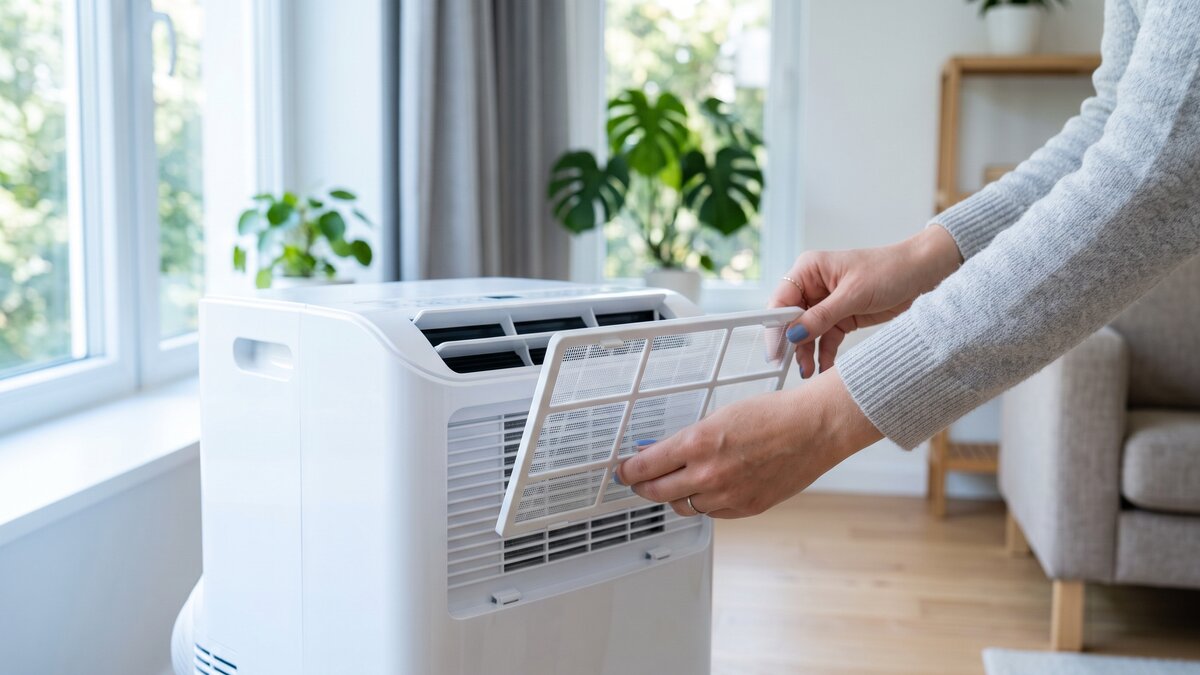
The air filter, located behind the front panel or on the side depending on the model, traps dust and pet hair before air passes through the coil. When clogged, it restricts airflow: the compressor has to run longer to reach the set temperature, which drives up electricity use and wears the unit out prematurely. A very dirty filter can even cause the coil to ice over, leaving the unit blowing barely cool air.
Removing the filter takes no tools on the vast majority of portable air conditioners: it simply slides or pops out. Vacuum it (soft brush attachment) for routine care, or rinse it in lukewarm soapy water if it's very greasy or dusty. Let it dry completely in the open air before refitting it: a still-damp filter encourages mould growth inside a closed air circuit.
Draining and Cleaning the Condensate Tank
Moisture pulled from the air collects in an internal tank, usually drained through a plug at the back of the unit. On most recent models, a level sensor shuts the unit down automatically once the tank is full, but waiting for that shutdown isn't good practice: standing water left for days in a warm, dark tank quickly becomes a breeding ground for mould and the bacteria behind bad smells that return as soon as the unit starts up again.
| Part | Recommended frequency |
|---|---|
| Air filter | Every 2 weeks during heavy use (heatwave), monthly otherwise |
| Condensate tank | Weekly draining under continuous operation |
| Coil and grilles | 1 to 2 times per season |
| Hose and window seal | Visual check every time it's put back into service |
Empty the tank regularly, rinse it with lukewarm water and a little diluted white vinegar, then dry it before refitting. Models fitted with continuous drainage (a hose connected to a drain point) largely avoid this chore, as long as you check the hose doesn't get blocked.
Cleaning the Coil, the Hose and the Casing
Behind the rear grille sits the coil, a fine metal fin stack that gathers dust and lint over the weeks. A thick layer degrades heat exchange: the unit takes longer to cool the room and uses more power for a poorer result. Vacuuming it with a soft brush attachment once or twice a season is usually enough.
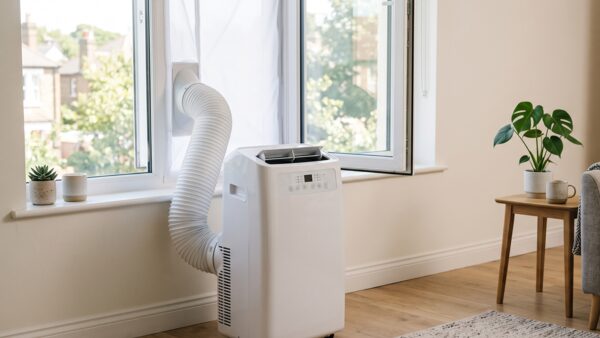
Use the same moment to check the exhaust hose: no tight kinks crushing it, no dust build-up in the air intake grilles, and the window kit seal still firmly in place. A seal that has shifted over the summer lets warm air in continuously, just as it would during a fresh installation.
Before Winter: How to Store a Portable Air Conditioner for the Off-Season
At the end of the season, a few minutes are enough to prepare the air conditioner for several months in storage. Empty the condensate tank completely, then run the unit for a few minutes in fan-only mode (no cooling): this dries out the inside of the circuit and greatly limits the risk of mould and odours the next time it starts up. Give the filter one last clean before refitting it.
Store the unit upright, somewhere dry, at a moderate temperature and out of direct sunlight, together with its hose and window kit so nothing goes missing. A dust cover or bag limits dust build-up during the months it sits idle. Repeated every year, these small habits are what most separates a portable air conditioner that lasts a decade from one replaced after three or four summers.
Refrigerant: What You Should Never Do Yourself
If, despite a clean filter, an emptied tank and a dust-free coil, the unit cools noticeably less well than when it was new, the cause may lie in the refrigerant circuit itself: a slow leak, even a small one, gradually reduces cooling capacity with no other visible symptom.
In that case, the right move is to contact the manufacturer's after-sales service or an accredited refrigeration technician, who can locate the leak and recharge the circuit properly. A unit still under warranty should always go through after-sales support first, before any third-party repair, or the warranty may be voided.