How to Install a Portable Air Conditioner at Home, Step by Step

No technician to call out, no hole to drill: a portable air conditioner can be set up in under 20 minutes. The two details that separate a unit that cools properly from one that struggles are the exhaust hose routing and how well the window kit is sealed.

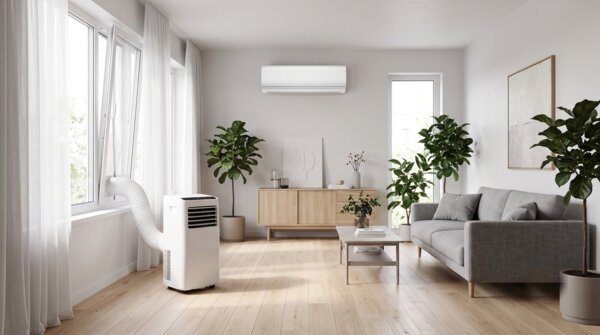
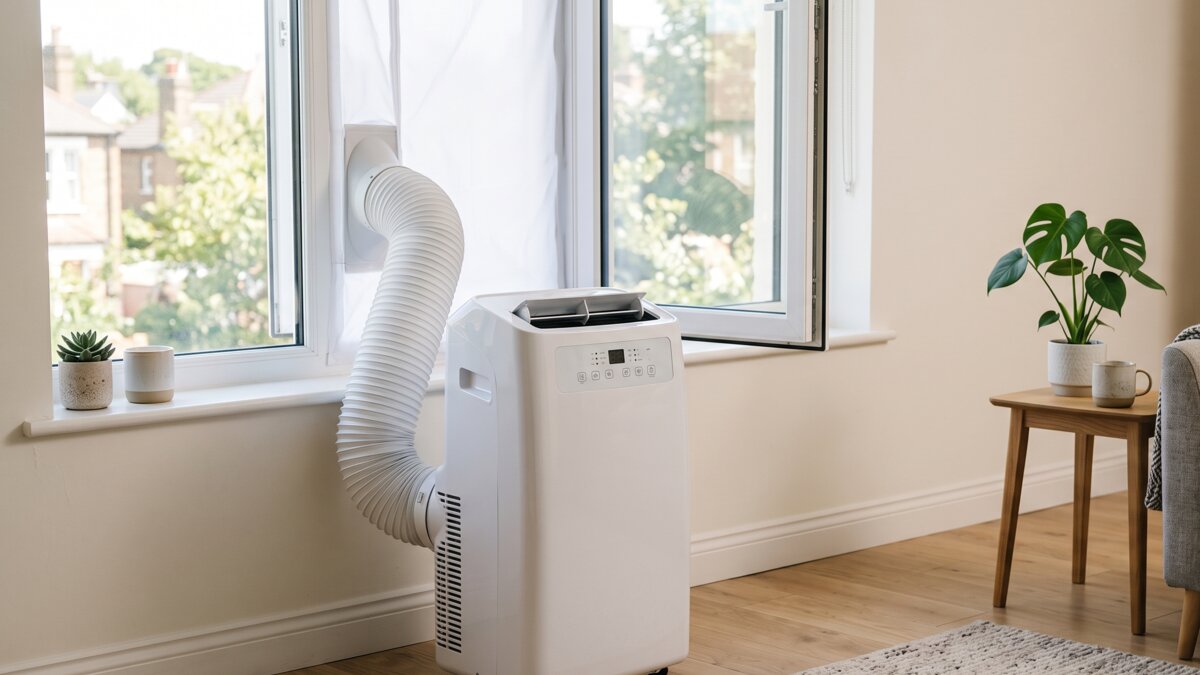
Portable air conditioner exhaust hose installed through a window sealing kit

What to Check Before You Start

Most portable air conditioners ship with a universal window kit (a telescopic adaptor plus a sealing strip) designed to fit a sliding or sash window. For a side-hung casement window, a purpose-made kit or a rigid panel cut to size usually seals far better than the flexible kit that comes in the box.

Did you know? A single-hose portable unit extracts warm air from the room through its exhaust hose, which creates a slight negative pressure. Without any compensating airflow (a door left slightly open to an adjoining room, for example), a completely sealed room can actually see its cooling performance dip a little.

How to Install a Portable Air Conditioner, Step by Step

  • 1. Choose a spot as close to the window as possible. The shorter and straighter the hose stays, the better the hot air is expelled: avoid tight bends that slow the airflow down.
  • 2. Attach the hose to the back of the unit. Most models use a clip or screw-thread fitting; make sure it clicks or locks fully into place.
  • 3. Fit the window sealing kit. Adjust the telescopic adaptor to the width of the opening, making sure it closes the gap around the hose completely.
  • 4. Connect the hose end to the window kit. Check that no gap remains between the hose, the adaptor and the window frame.
  • 5. Leave a small air gap somewhere in the home. A door left slightly open to an unconditioned adjoining room is enough to compensate for the extracted air without cancelling out the cooling effect.
  • 6. Plug in and switch on. Wait a few minutes after transporting or storing the unit horizontally before the first start-up, to let the refrigerant settle.

How to Optimise Efficiency Once It's Installed

Close the curtains or blinds on the sun-facing side during the hottest hours: cutting down solar heat gain reduces the workload on the air conditioner by the same amount. Empty the condensate tank regularly, or connect it to continuous drainage if the unit supports it: most recent models shut down automatically as a safety measure once the tank overflows.

Pro tip A self-adhesive foam strip, sold separately, lets you fine-tune the seal around the factory window kit, often the weak point of the installation on a window with unusual dimensions.

Mistakes That Reduce a Portable Air Conditioner's Efficiency

Avoid this Never extend the hose beyond its supplied length with a mismatched pipe: past a certain length, pressure loss inside the duct noticeably degrades hot-air extraction, sometimes more than a slightly imperfect seal would.

Other common mistakes: placing the unit too far from the window, forcing the hose into several tight bends; skipping the seal because a small gap seems harmless, when warm outside air actually flows through it continuously; and forgetting to empty the condensate tray, which shuts the unit down at the worst possible moment.
Products mentioned in this article

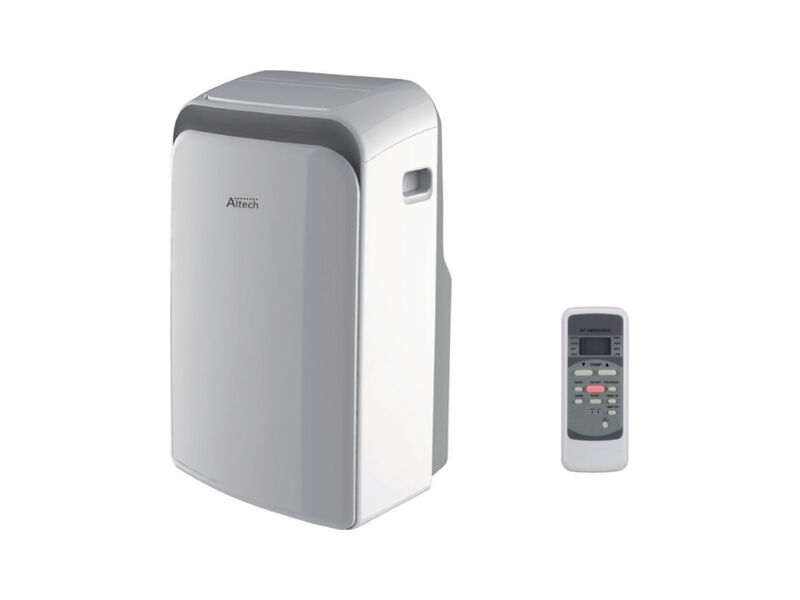
Altech ATP-035S12 3.5 kW

Altech ATP-035S12 3.5 kW

499.00€ (2)

The Altech ATP-035S12 portable air conditioner: 3.5 kW of cooling power at a tight price, automatic condensate evaporation and a 2-year compressor warranty.

See details
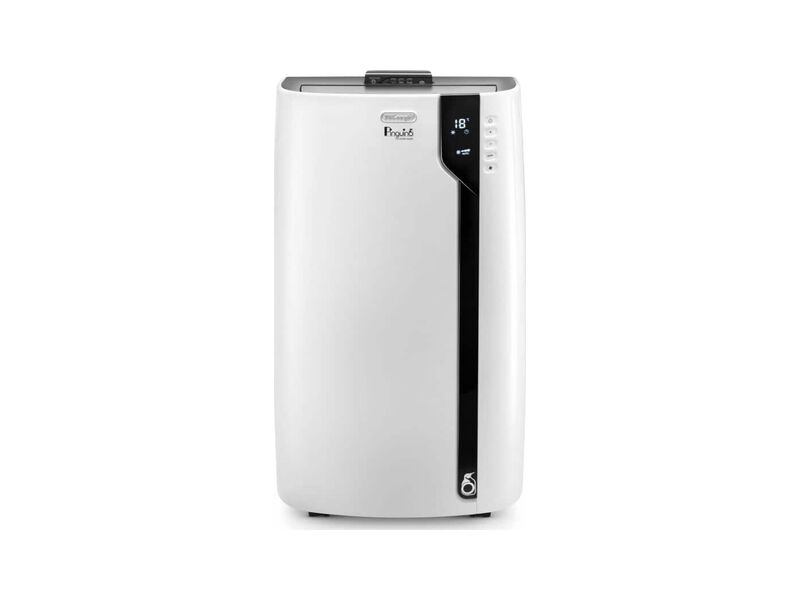
De'Longhi Pinguino PAC EX100 Silent

De'Longhi Pinguino PAC EX100 Silent

Check price (14)

The Pinguino, De'Longhi's long-standing portable air conditioner reference: 10,000 BTU, A++ energy class, Real Feel technology and a built-in dehumidifier.

See details
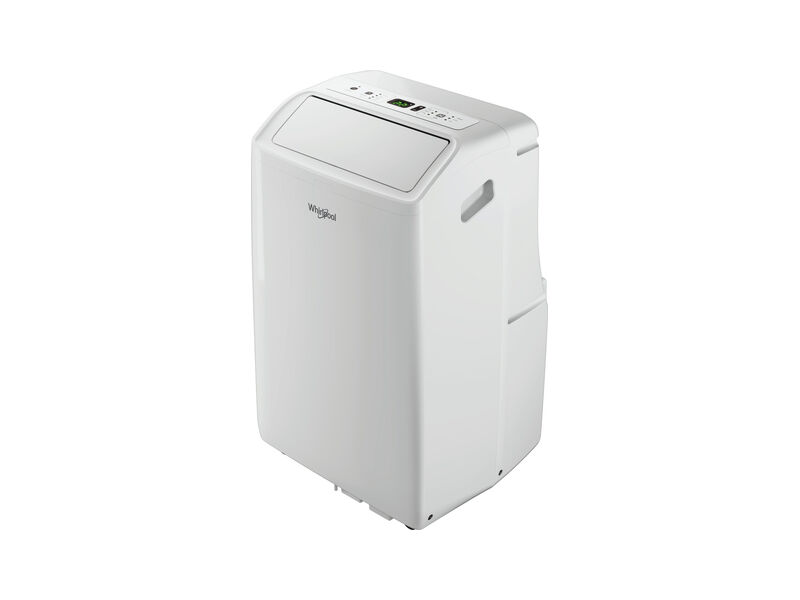
Whirlpool PACF212HP W

Whirlpool PACF212HP W

Check price (4)

Reversible for both cooling and heating, with a Jet function (+/-5°C in 10 minutes) and a washable HEPA filter, the Whirlpool PACF212HPW covers rooms up to 20m².

See details
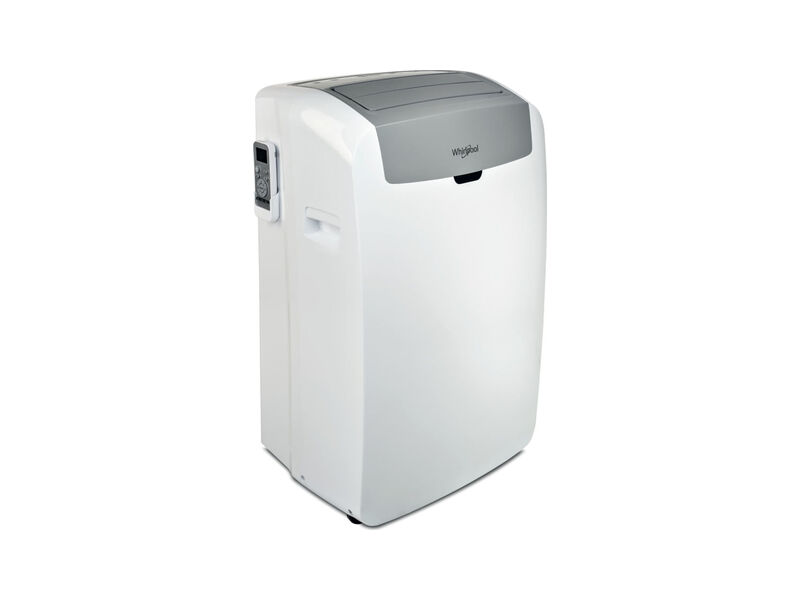
Whirlpool PACW212CO

Whirlpool PACW212CO

Check price (10)

A portable air conditioner from a major appliance name, with an Around U function that tracks the temperature around you via a sensor built into the remote.

See details

Frequently asked questions

Yes: unlike a fixed split system, which requires a certified professional to handle the refrigerant, a single-hose portable air conditioner can be installed by anyone in under 20 minutes.

No: leaving a small air gap, such as a door slightly open to an adjoining room, compensates for the air pulled out through the hose and avoids the slight performance dip caused by a completely sealed room.

It isn't recommended with a mismatched pipe: past a certain length, pressure loss inside the duct noticeably degrades hot-air extraction. It's better to move the unit closer to the window instead.

For a casement window, a purpose-made sealing kit or a rigid panel cut to size usually seals the opening better than the flexible universal kit supplied in the box.

A full condensate tank triggers an automatic safety shutdown on most recent models. Empty it regularly, or connect it to continuous drainage if the unit supports it.

Sources: