What Air France-KLM posted in Shanghai
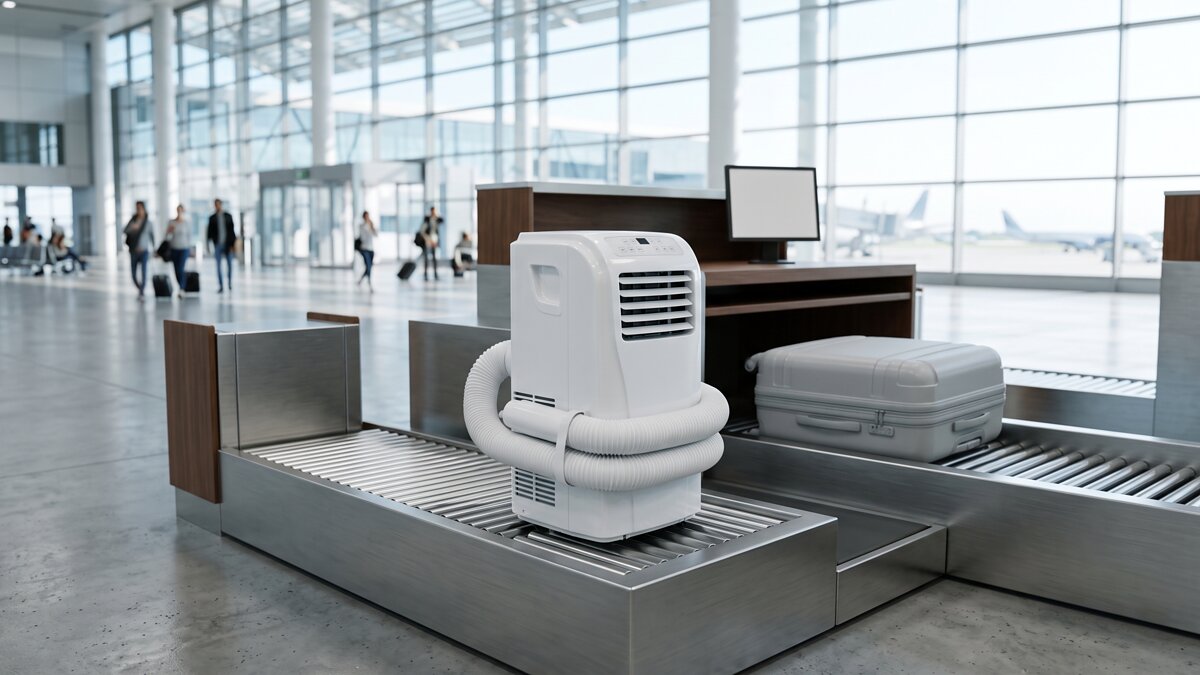
It all started with a printed sign. At the Air France-KLM check-in desk at Shanghai Pudong International Airport, a notice warns passengers that the group does not accept portable air conditioners, either as checked or as carry-on baggage. The photo spread across Chinese social media, and Air France-KLM customer service confirmed the instruction on 10 August 2026, citing “operational and safety” considerations.
Why now? Because the summer of 2026 created an entirely new flow: Europeans bringing back from China cooling appliances that are either sold out or wildly overpriced at home. We described that market squeeze in our report on the rush for fans and air conditioners: shelves emptied by mid-morning, trickling restocks, prices climbing week after week. The phenomenon reached genuine logistical scale: between April and June 2026, China-Europe freight trains carried more than 100,000 portable air conditioners and key components out of southern China, worth roughly 52 million US dollars according to China Railway. One case went viral: a Chinese employee ferrying an air conditioner all the way to Barcelona on behalf of a French colleague, for 1,412 yuan.
So while rail moves tens of thousands of these machines without difficulty, aviation says no. And that is not a commercial decision: it follows directly from what circulates inside the refrigeration circuit.
Why a cooling appliance gets stuck at the gate: it is all about the refrigerant
A portable air conditioner is not a fan in a bigger shell. It is a complete refrigeration machine: a compressor, a condenser, an evaporator, and above all a pressurised refrigerant circulating in a sealed loop. That fluid is what carries heat out of your room, and it is what causes the problem in flight.
The paradox is that environmental rules and aviation rules pull in opposite directions. To cut greenhouse emissions, the EU F-gas regulation pushes manufacturers away from high global warming potential fluids, R410A and then R32, towards natural hydrocarbons, chiefly R290, which is simply propane, with a global warming potential of around 3 against 675 for R32. Excellent for the climate. But propane is, by its very nature, a flammable gas.
For transport purposes, everything hinges on that single distinction:
- Non-flammable refrigerant (R134a, R410A): the machine falls under UN 2857. In air transport it escapes the dangerous goods rules altogether as long as it holds less than 12 kg of a Division 2.2 gas, which covers every domestic appliance without exception.
- Flammable refrigerant (R290 propane, R600a isobutane, R32): the machine falls under UN 3358, Class 2.1, “flammable gas”. That listing does not appear among the dangerous goods a passenger is allowed to carry, and transport tables mark it as forbidden on passenger aircraft and on cargo aircraft alike.
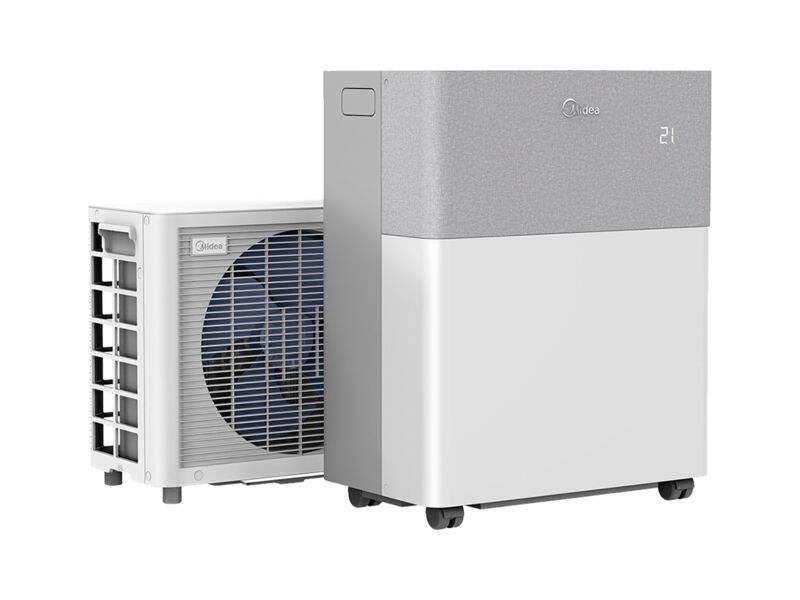
A recent portable air conditioner almost always sits in the second category. The Midea PortaSplit 12,000 BTU, the most sought-after model of the European summer, carries 0.62 kg of R32. A single-hose unit running on R290 holds far less, since appliance safety standards cap the permitted propane charge. But quantity changes nothing here: it is the flammable nature of the gas that triggers the refusal, not the volume.
Why the very same appliance travels happily by rail or by sea
Here is the part that surprises people most: the same machine, in the same box, moves by road, rail or sea with no particular formality, yet gets turned away at an airline check-in desk.
The explanation lies in a special provision of the land and maritime regulations, provision 291 of ADR and of the IMDG Code. It exempts refrigerating machines containing less than 12 kg of gas, flammable gas included, on three conditions: the refrigerant must be fully contained within pressure-retaining components, those components must be designed and tested to at least three times the working pressure, and the assembly must not be liable to burst or crack under normal conditions of transport. In other words, a brazed, factory-sealed circuit is judged safe enough for a lorry, a train or a container ship.
Aviation does not carry that exemption over to flammable gases, and you do not need an engineering degree to see why: in a pressurised cabin, a propane leak has nowhere to disperse, and there is no hard shoulder to pull over onto and no fire service ten minutes away. The difference in treatment is not an administrative inconsistency, it is the same risk assessment applied to an environment that gives no second chances.
It also explains why those 100,000 air conditioners headed for Europe by rail rather than by air. The mode of transport was not chosen for its cost, but because it is the one that will take the goods.
What you can take, appliance by appliance
Not every cooling appliance is in the same boat, and the vast majority of what we sell travels without the slightest problem. Here is the sorting, from simplest to most troublesome.
| Appliance | What is inside | By air |
|---|---|---|
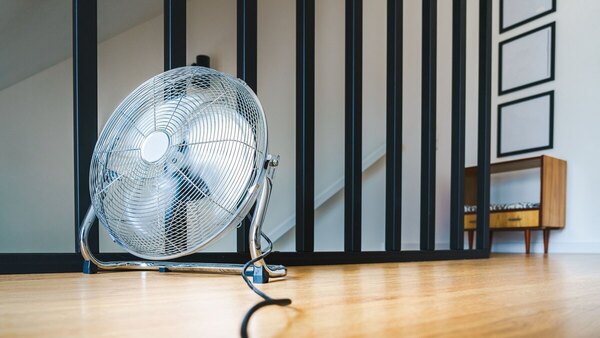
| Mains-powered fan | No fluid, no gas | Accepted, cabin or hold depending on size |
| Pocket fan or mister with a USB battery | Lithium battery of a few Wh | Accepted, battery travels in the cabin |
| Patio or pedestal mister | Water, hoses, pump | Accepted, tank and hoses fully drained |
| Passive cooler, cool bag | Insulating foam | Accepted, treated as ordinary baggage |
| Thermoelectric cooler (Peltier effect) | No refrigerant at all | Accepted |
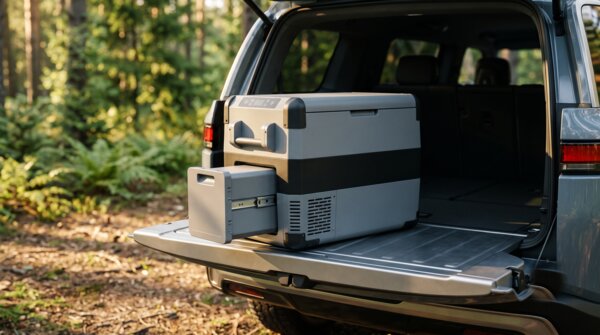
| Compressor cooler on R134a | About 60 g of non-flammable gas | Accepted in principle, written airline approval advised |
| Compressor cooler on R600a | Isobutane, a flammable gas | Refused, UN 3358 |
| Cooler with a built-in battery | Lithium pack of 250 to 300 Wh | Refused above 160 Wh |
| Portable air conditioner, single-hose or mobile split | R290 or R32, flammable gases | Refused |
The easy cases
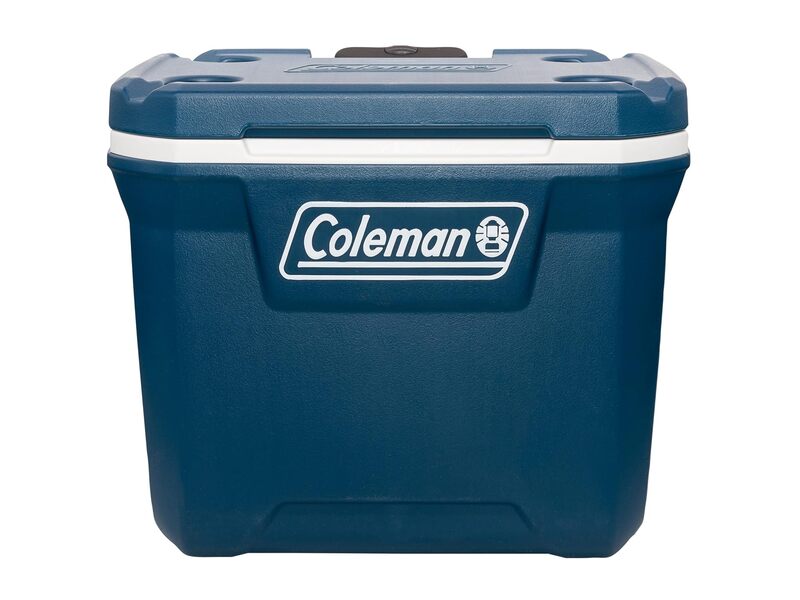
A fan contains nothing hazardous: no gas, no liquid, no pressure. The only question is its bulk, so your airline’s baggage allowance. The same goes for a mister, provided you drain tank and hoses carefully, residual water being mostly a threat to your clothes. A passive cooler such as the Coleman Xtreme 47L or a cool bag is handled exactly like a suitcase.
Electric coolers: it depends on the technology
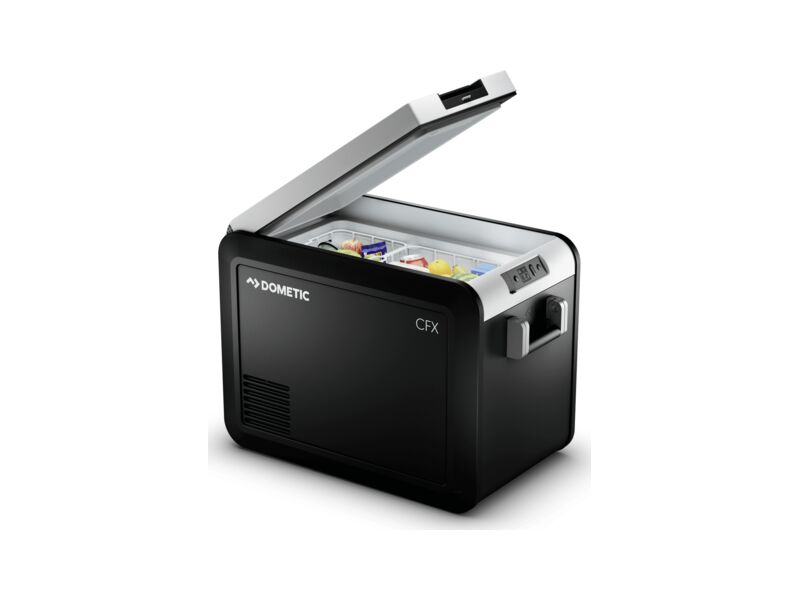
A thermoelectric cooler works by the Peltier effect, with no refrigeration circuit whatsoever: nothing to declare. A compressor cooler, however, is a genuine little refrigeration machine, and its refrigerant decides everything. The good news is that most benchmark portable models use R134a, non-flammable, in very small amounts. The Dometic CoolFreeze CFX3 45 holds around 60 g, nowhere near the 12 kg threshold above which the air rules kick in. On paper, it flies. In practice, tell the airline and keep the answer in writing: nothing stops a carrier from being stricter than the rulebook.
To understand what happens inside that circuit, our feature on how a compressor cooler works spells out the refrigerant’s exact role. And the decisive piece of information fits on one line: the rating plate, at the back or underneath the appliance, always states the refrigerant and its charge.
The second trap: the lithium battery in self-powered coolers
Even with no flammable gas, a portable cooling appliance can be refused for an entirely different reason: its battery. Self-powered coolers, the ones that run a night or a weekend unplugged, carry lithium packs whose capacity goes far beyond what aviation allows.
The thresholds airlines apply are easy to remember:
- Up to 100 Wh: allowed in carry-on baggage, no paperwork needed. This covers pocket fans, phone batteries and small power banks.
- From 100 to 160 Wh: allowed only with the airline’s prior approval, and in limited numbers.
- Above 160 Wh: refused on commercial passenger flights.
On top of that comes one absolute rule: a removable or spare battery never goes in the hold, it travels in the cabin with its terminals protected. If a piece of carry-on baggage holding a lithium-powered device ends up gate-checked, the battery must come out first.
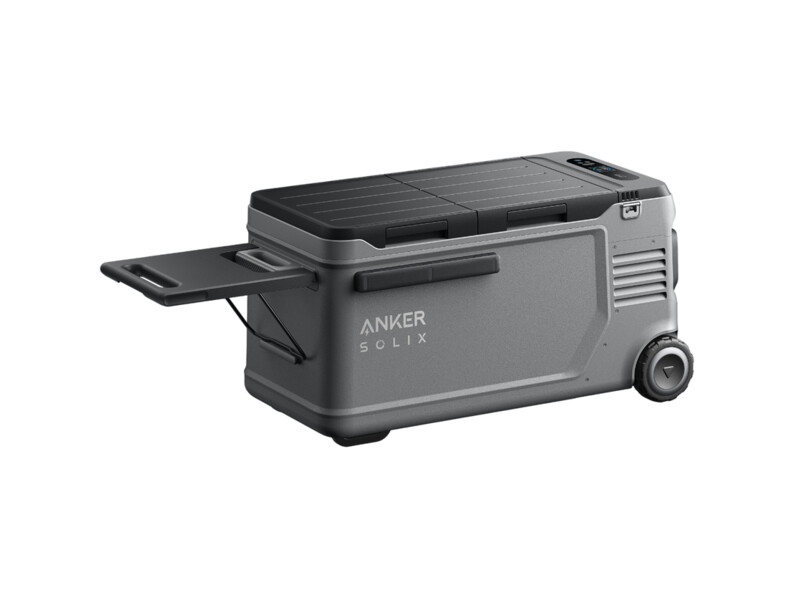
Run the numbers on real models and the verdict comes quickly: the Anker SOLIX EverFrost 2 58L carries a removable 288 Wh LFP pack, and the EcoFlow Glacier a 298 Wh one. Both sit well above the 160 Wh ceiling: the cooler can travel, its battery cannot. That is precisely the blind spot of the category we flagged as the new trend in portable cooling, superb in a van or on a boat, unworkable on a plane.
What to do instead
Before hunting for a workaround, a reality check: a portable air conditioner was never really a piece of baggage. The PortaSplit weighs about 45.5 kg all in, split between an indoor unit of roughly 32 kg, a 10 kg outdoor unit and its rigid 2 m link. Even if it were accepted, the excess baggage bill would outrun the price of the appliance.
The options that actually work:
- Buy at destination, or order in the country you are heading to. Less of an adventure, but it is what secures the manufacturer’s warranty, the right mains plug and reachable after-sales support. Our air conditioners and coolers sections give you the selection criteria, noise level and handling included.
- Use freight for a genuine relocation. Road, rail and sea all accept these appliances, provided the forwarder declares the goods properly. That is the normal channel, and it is the one the entire trade in these products uses.
- For a road trip, keep the cooling in the vehicle. A compressor cooler earns its keep in a van, a campervan or a boot, not in an aircraft hold. If the trip starts with a flight, rent or buy on arrival.
- Check, then get it in writing. Read the rating plate to identify the refrigerant, check your national aviation authority’s list of restricted items, then ask your airline for written confirmation. A carrier may always be stricter than the regulation, and it is the carrier that decides at the desk.
One closing thought. This story about a printed sign really shows how unprepared Europe was for the heat this summer, to the point where private individuals have air conditioners ferried in from the other side of the world. The most effective answer remains, in our view, the least spectacular one: shutters closed by day, night ventilation as soon as the outside air drops below the indoor temperature, and a properly sized appliance bought calmly, rather than a scarce object hauled home at great expense.